developer-tools · ranking

Best AI Tools to Query Live Databases Using Plain English

If you need to ask a live database questions in plain English, the best tools are the ones that can turn a conversational prompt into a correct query, a readable answer, a chart, and a follow-up-safe thread. We tested 11 database-AI tools on the same live PostgreSQL ecommerce data with three benchmark chains: customer acquisition, best customers with unpaid-order and payment-method follow-ups, and order-pipeline health with pending-paid edge cases and month-over-month comparisons.

Tested June 202611 tools5 decisive checks249 findings14 min read
Our pick

Anomaly AI

Free · $25 /month
55 of 5 checks

Excellent at visible SQL, meanings, and auto-insights, but follow-up context can shift between turns.

Catch

When the business term was underspecified, the tool surfaced its interpretation instead of hiding it. It showed the assumptions and the alternate ranking dimensions, which is exactly the right way to handle ambiguity.

Pick something else if…

The scoreboard

We rank on the 5 checks that decide whether a tool does this job: Ambiguity Handling, Business Insight, Plain English Query Handling, Result Readability, SQL Generation. A check only carries a score when we recorded a finding for it, and a tool has to be measured on all of them to take the top spot. We also checked Chart / Visualization Support, Dashboard Workflow, Export / Reuse, Follow-Up Context, FS Learning Value, SQL Visibility — compared for you, but not part of the ranking.

Tool5 decisive checksCoverageScoreWhere it lands

Columns, left to right: Ambiguity Handling · Business Insight · Plain English Query Handling · Result Readability · SQL Generation

Compare

Pick the tools you care about, then compare what they returned or how they scored.

Tools
11 of 11 selected
Result not recorded per promptAnomaly AI was tested, but its results were written up across all 3 prompts together rather than prompt by prompt.

Anomaly AI

Anomaly AI's findings for this run cover all 3 prompts together, so there is no per-prompt result to show here. Its full write-up is in Evidence.

Covered run-wide

The output#2
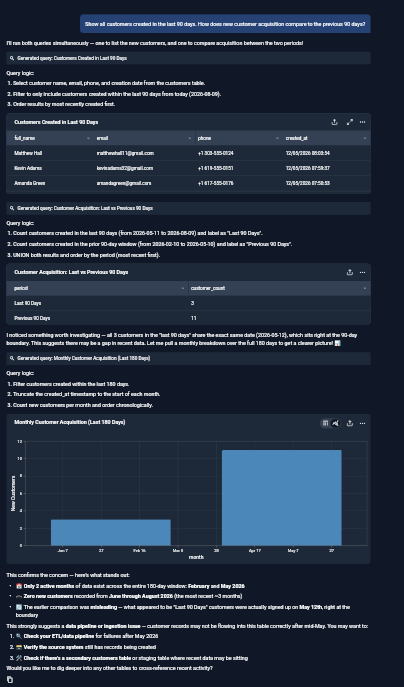
BlazeSQL

It answered the customer-acquisition question, compared the two 90-day windows, and then went further by diagnosing a likely data-gap issue and showing the trend as a chart.

d46e741481484410a17a5845e5c0fc4b.png

The output#3
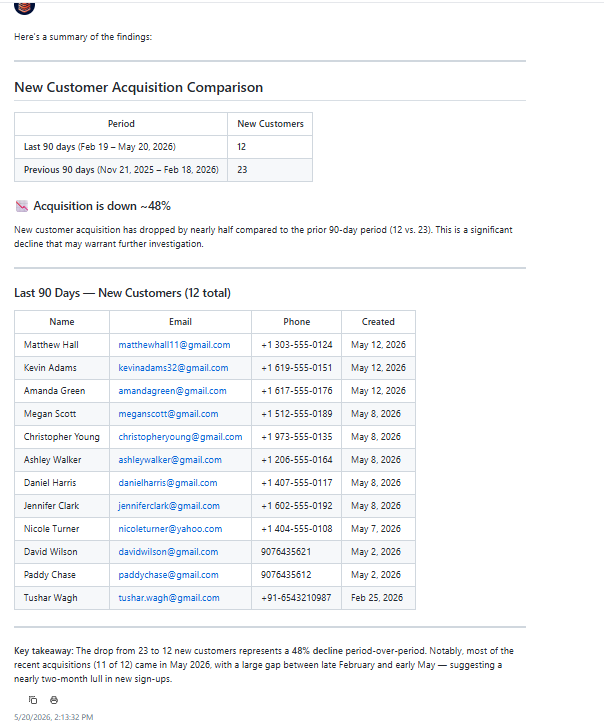
AskYourDatabase

It handled the plain-English acquisition comparison well, ran the SQL immediately, and returned a readable comparison plus customer list. The only notable gap is that the visual summary was not generated automatically on the first answer.

a86f17ae7bfc4061b79dd78e334e7f02.png

The output#4
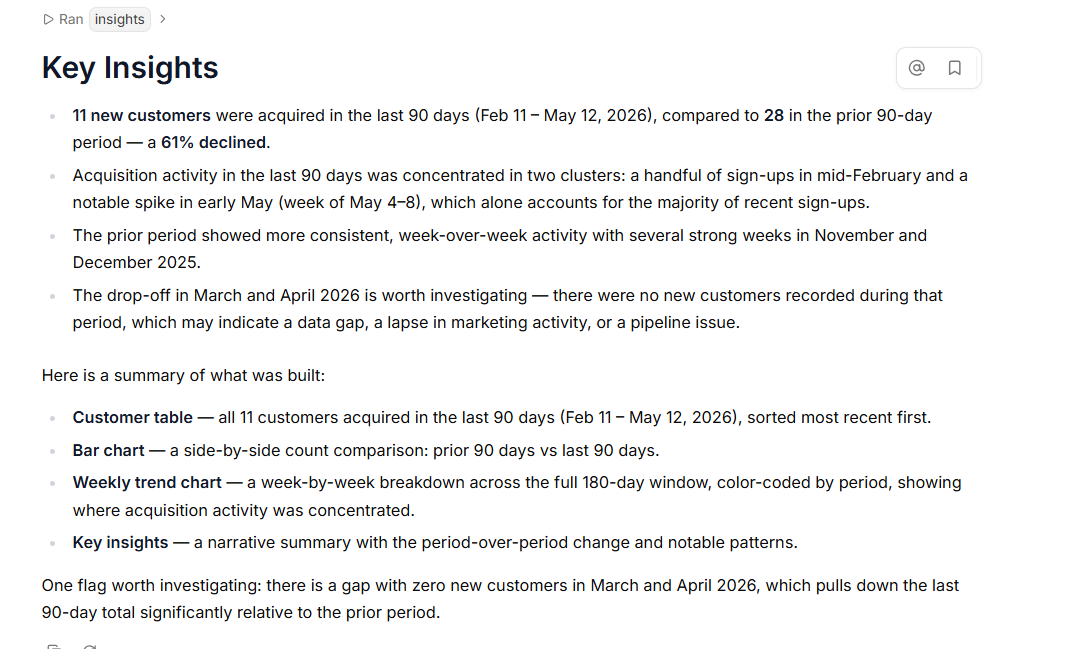
Querio

It handled the customer-acquisition request cleanly: it listed the new customers, compared the two 90-day windows, added charts, and summarized the drop in new sign-ups in plain business language.

2188ae91f2d94f04af541ad4e621cd1f.png

The output#5
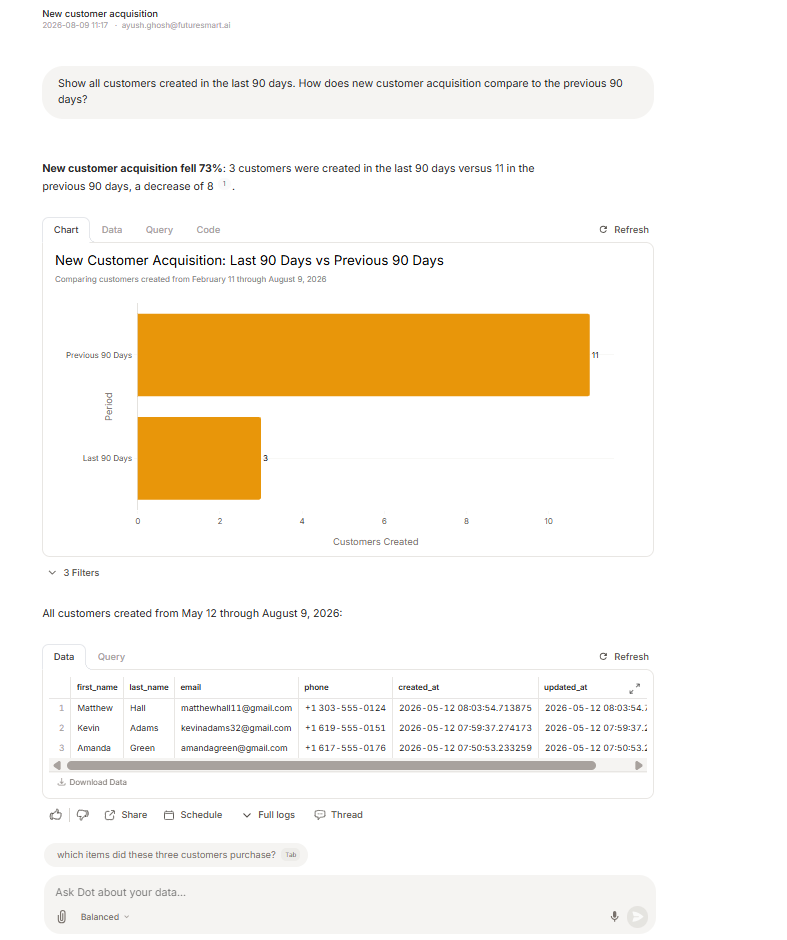
Dot

It answered the 90-day acquisition question, showed the matching customer list, and auto-made a chart, but it stopped short of explaining why the drop happened or what to do next.

8ce008eac9564d3cb0a6a0cf9a6cb5b4.png

The output#6
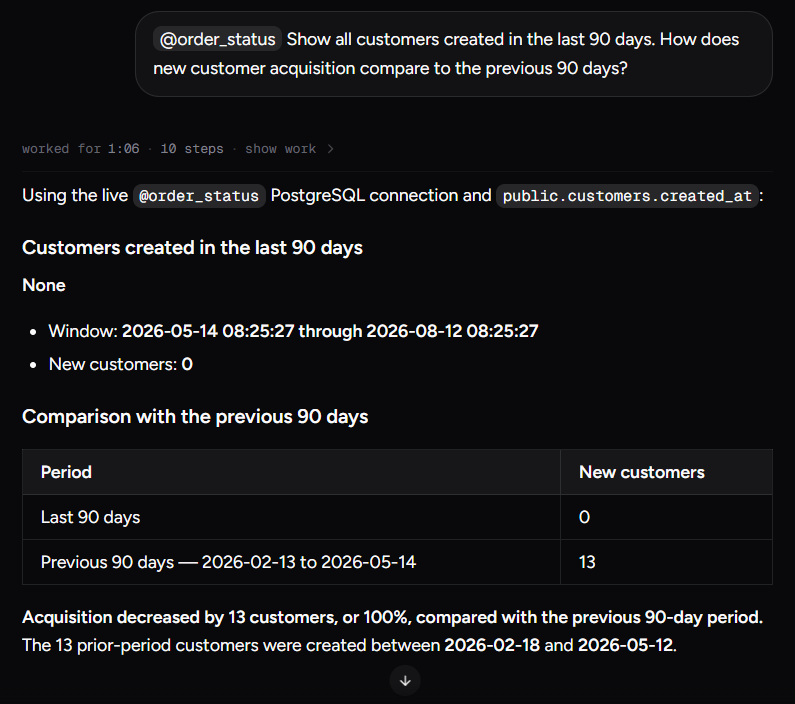
camelAI

It answered the 90-day customer acquisition question correctly from the live database and gave a clean 0-versus-13 comparison, but the chart only showed up after a separate request.

2c2f039a66f34e54bac38fd77e08da14.png

The output#7
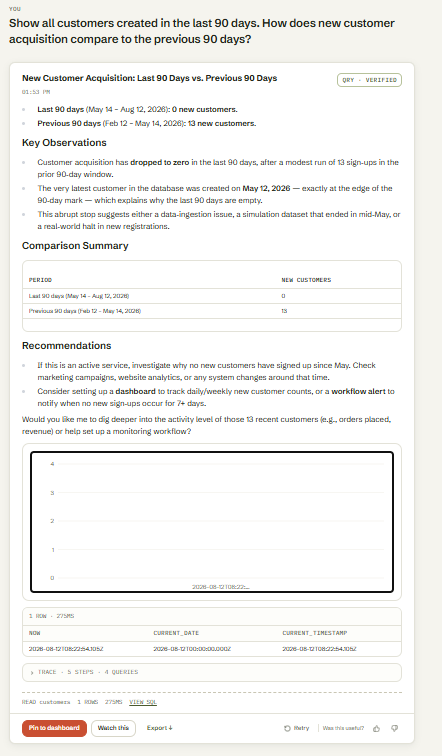
AI for Database

It answered the acquisition question directly, showed the SQL and trace, and rendered a chart even though the current window was empty.

73ae37735073485283aafc12d5ae183b.png

The output#8
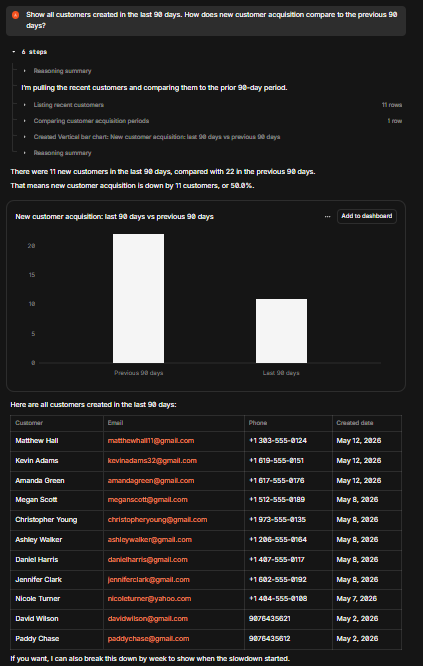
Basedash

It handled the plain-English request cleanly, returned the correct customer list and period comparison, and automatically added a useful bar chart.

6e48cc55f9e34b8289eb052c44b186bb.png

The output#9
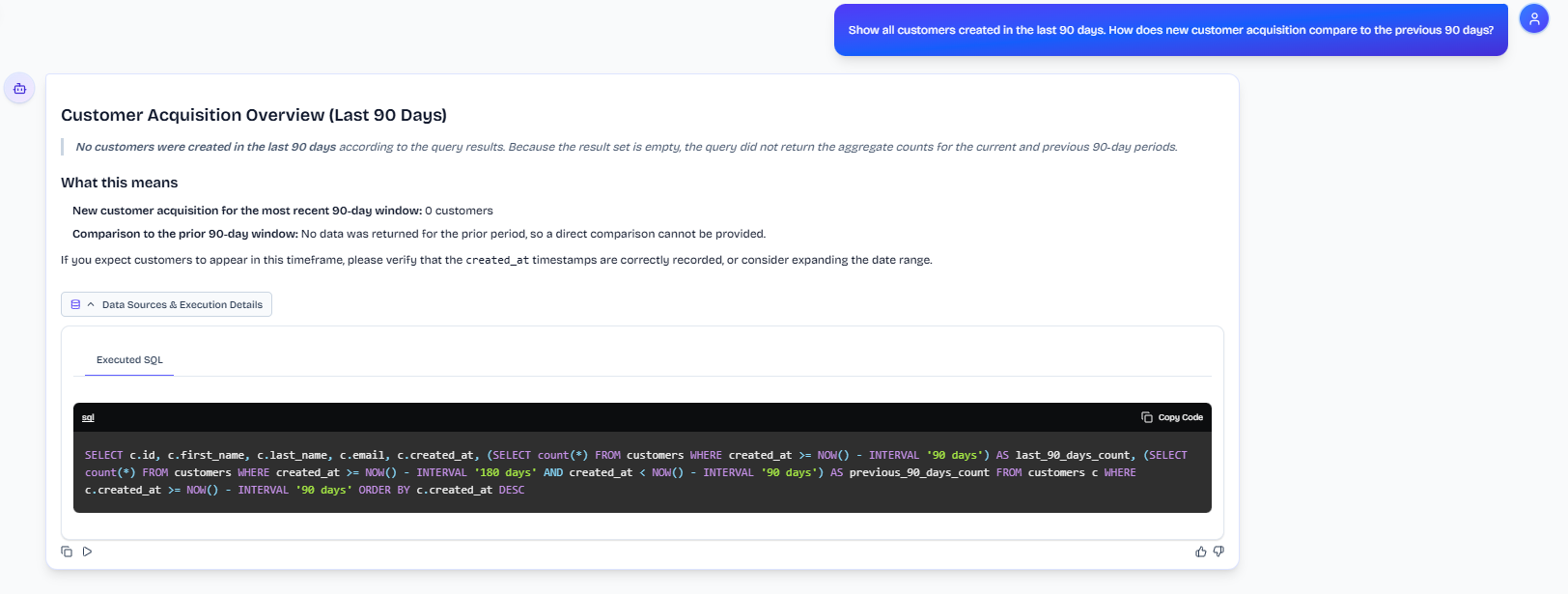
FutureSmart NL2SQL Agent

It correctly showed that no customers were created in the last 90 days and explained the empty state in plain language, but it failed to surface the previous-90-days comparison even though that number is queryable. Useful output, but the comparison itself breaks.

6ac5d5713df44d3fa93f2f0d7a0aa3fe.png

The output#10
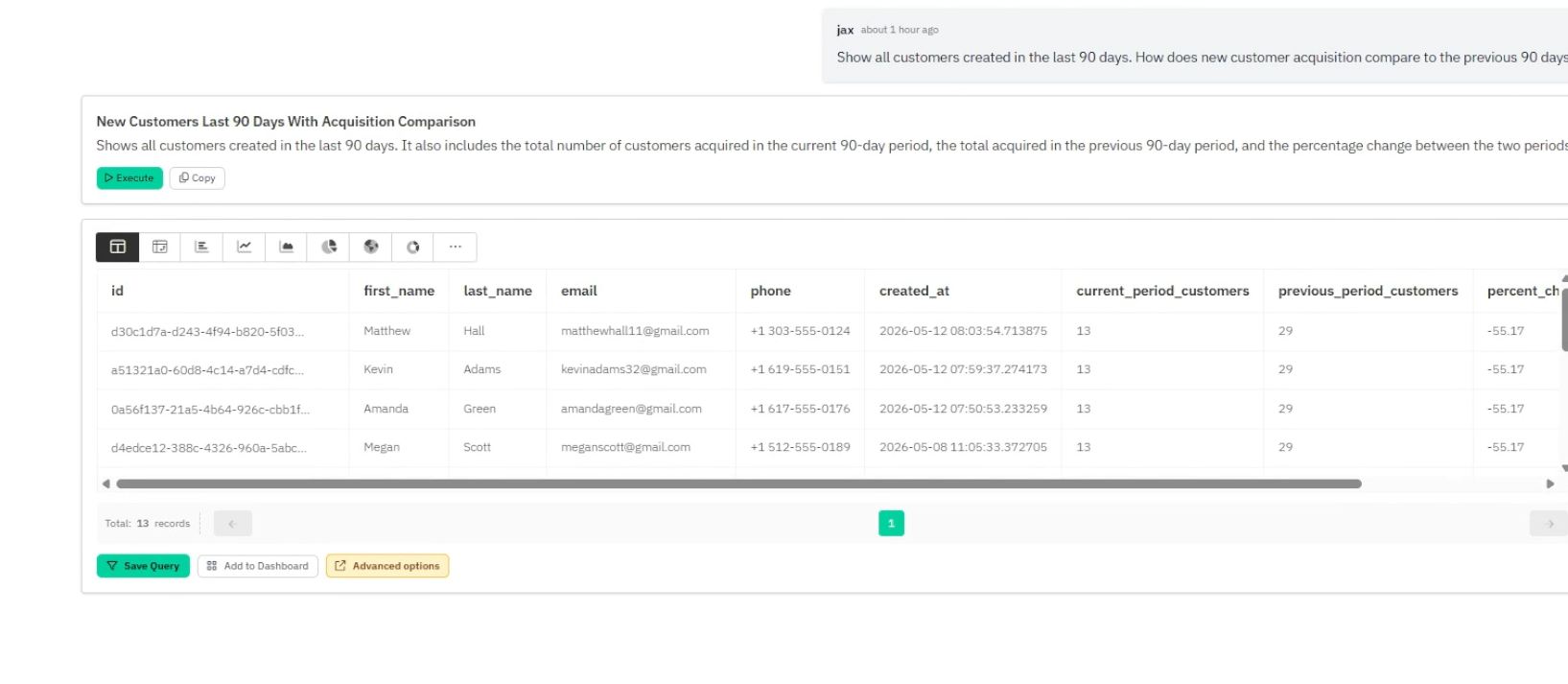
Draxlr

It correctly handled the 90-day acquisition question, produced the right comparison query, and gave reusable controls, but the default chart choice was bad and the result lacked a strong business takeaway.

91fb51d4c97f47dea6b4379b4c10b82e.png

The output#11
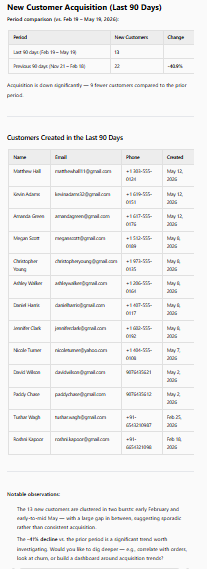
Definite

It answered the acquisition question correctly with a clear 13-vs-22 comparison and a readable customer list, but getting the visualization meant moving into a separate dashboard instead of seeing it inline.

9e37dd7c62974ba99d64cfedd0ef0813.png
The evidence

Open a tool to inspect every recorded check and finding.

Why this score

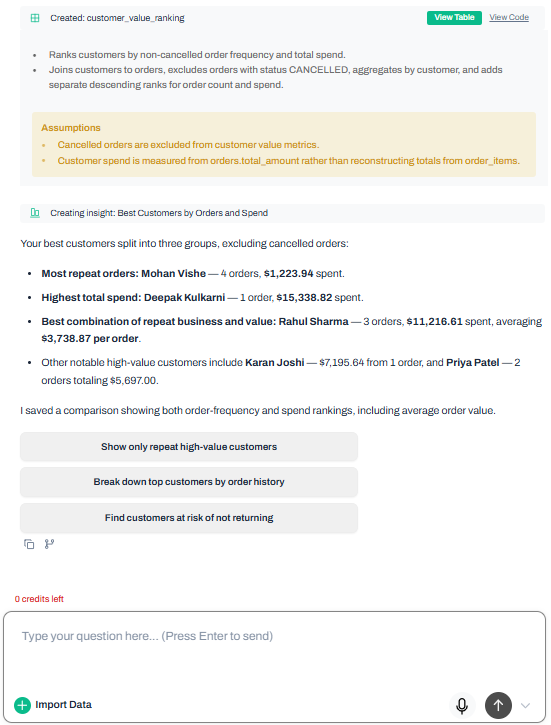
When the business term was underspecified, the tool surfaced its interpretation instead of hiding it. It showed the assumptions and the alternate ranking dimensions, which is exactly the right way to handle ambiguity.

When we tried: Best customers with unpaid-order and payment-method follow-ups

When 'best customers' was ambiguous, it did not guess silently; it exposed a two-axis ranking, stated the cancelled-order and total_amount assumptions, and separately ranked repeat business versus spend.

permalink to this finding →
What came backRecorded evidence

Final Take

Anomaly AI is the page’s overall winner and the safest all-around pick: it is fully measured and scored 5.0/5.0 on every ranking check that decides the result — ambiguity handling, business insight, plain-English queries, result readability, and SQL generation. That makes it the strongest choice when you want a traceable, self-verifying business-analysis flow without obvious gaps. BlazeSQL is the closest runner-up. It matches Anomaly AI on the five decisive checks, but the scorecard shows more mixed support on the non-ranking dimensions, especially chart support and export/reuse. If you care more about follow-up context and dashboard workflow, BlazeSQL is the strongest alternative. AskYourDatabase is a good fit for conversational SQL with solid follow-up reasoning, but charts need a second ask. Querio is the better fit when transparent SQL generation and charts matter most, though it gives up some business insight and result readability. Basedash works well for clean, conversational business answers, but it is much weaker when questions get ambiguous and it offers very limited SQL visibility. Definite has strong business-answer and dashboard scores, but it is only partly tested on the decisive checks, so it stays below the fully measured tools by policy even though some of its measured scores look strong.

Tested as of June 2026 · Will be re-verified monthly
Built by FutureSmart AI — the team behind AI Demos

Need a custom AI solution for this use case?

If you are looking to build a custom natural language to SQL, database query assistant, or analytics chatbot for your business or internal workflow, email us at contact@futuresmart.ai.

Get a custom build

Found something inaccurate or missing? We try to keep our AI research accurate and useful. If you found outdated information, an issue, or have a suggestion, email us at collaborate@aidemos.com.

Comments (0)

Please Log in to join the discussion.