Evidence · first-party tested/Best AI Tools for Extracting Structured Data from PDFs and Business Documents
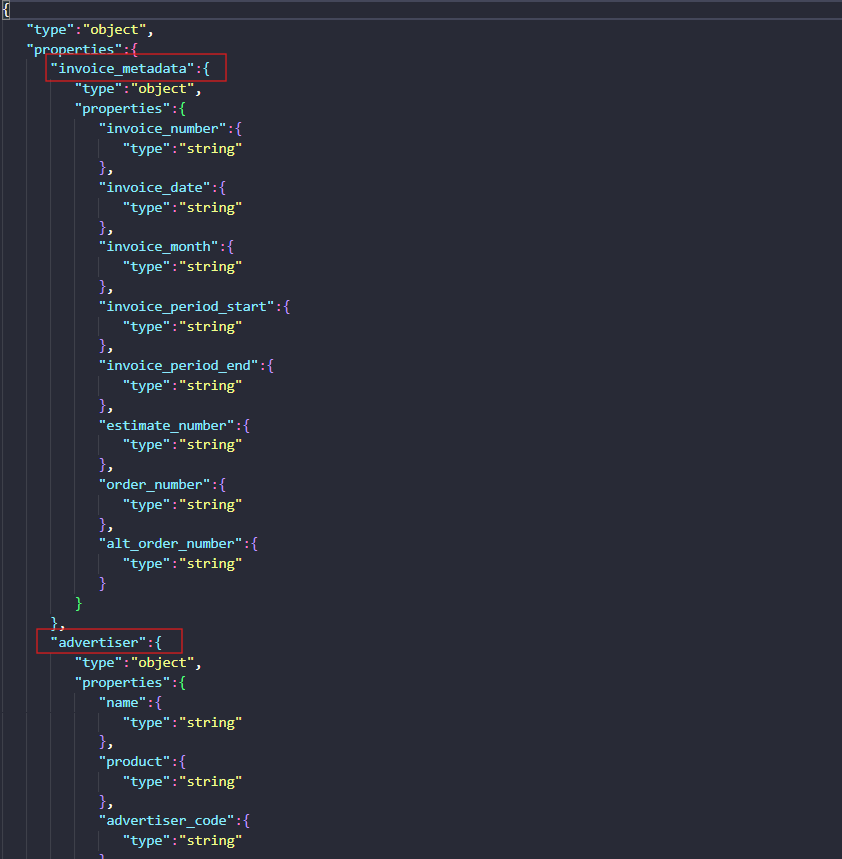
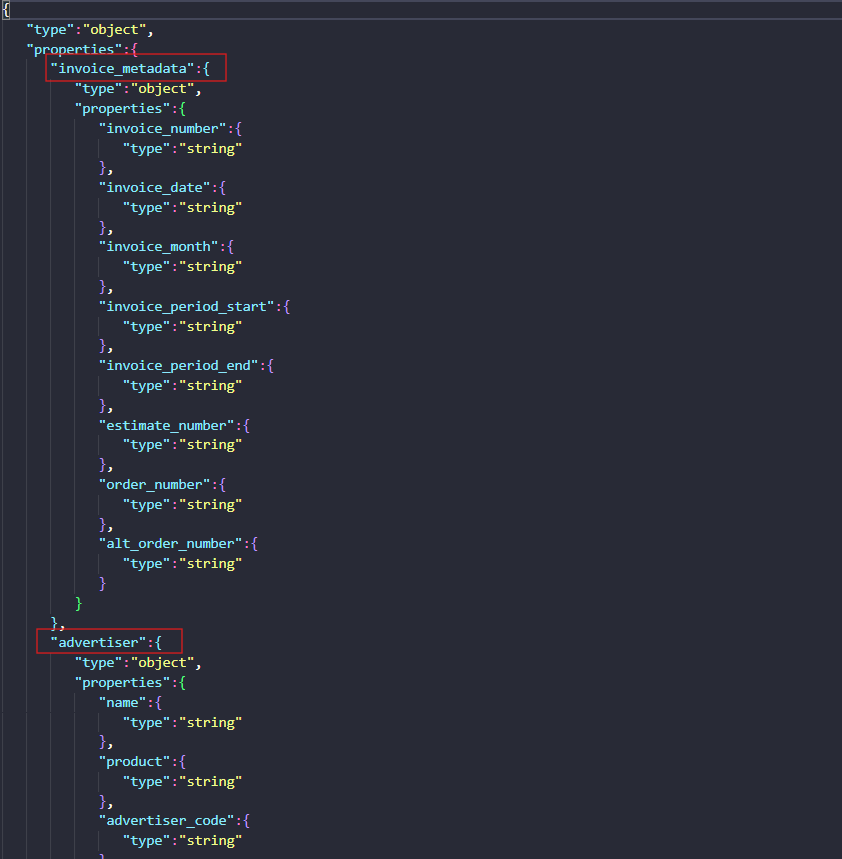
It reorders several schema sections relative to the supplied schema, so the output is not consistently in the authored field order.
What was measured
Structural Clean Output
Is the JSON directly consumable by a downstream AI pipeline or system without requiring a structural transformation layer?
context, not decisivetransformation
Directly consumable JSON is valuable for workflow convenience, but it is a delivery/integration concern rather than the core measure of extraction quality itself. (3 of 3 judges)
What was given, what came back
Test input: Invoice PDF · pdf · group: financial-document-extraction
Input — what we sent
Input not captured
This run recorded no prompt or input file for the test, so we cannot show you what produced the result below. Capture gaps are tracked, not hidden.
A 2-page broadcast advertising invoice PDF with 8 line items, complex time/day fields, large dollar amounts, and compliance text, used to test hierarchical line-item extraction and financial validation.
Why this input is hard
- · Nested line-item hierarchy extraction
- · Multi-page line-item continuity across a page break
- · Large dollar amount precision and total validation
- · Parsing time slots, day patterns, and air dates
- · Extraction of alphanumeric ad IDs and reference codes
- · Structured metadata mapping for advertiser, station, billing, and remit sections
- · Political advertising and FCC compliance text recognition
Output — unretouched
Also checked on this input — same tool, 5 other criteria
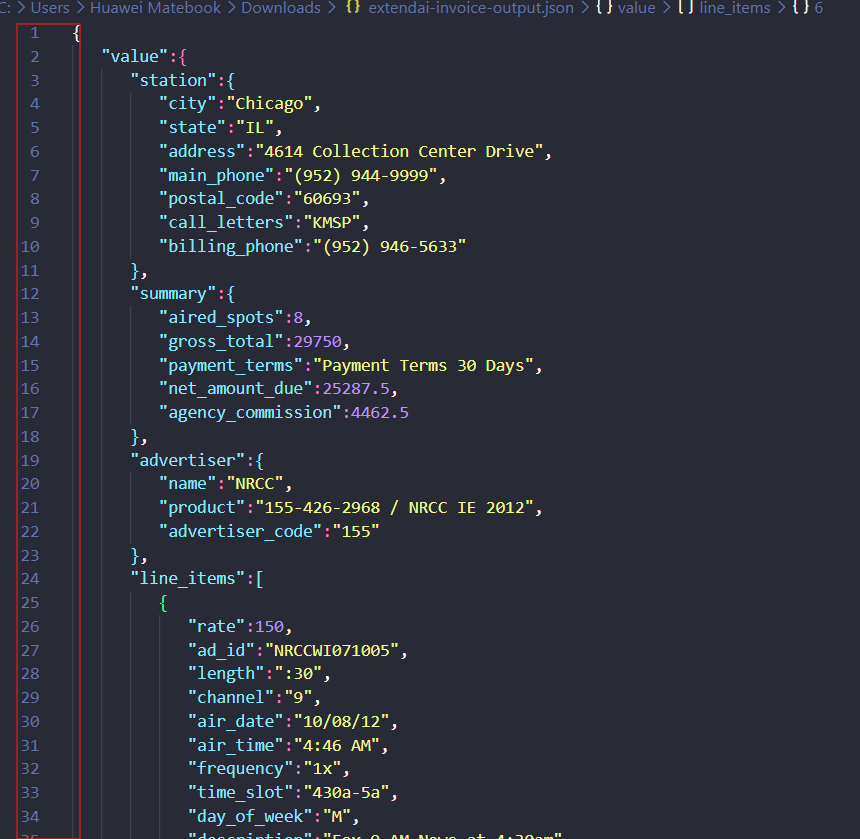
Extraction Accuracy✓ WorkedIts invoice totals match the source document, including 8 aired spots, gross_total 29750, agency_commission 4462.5, and net_amount_due 25287.5.Extraction Accuracy⚠ StruggledIt sometimes carries source labels into values: `payment_terms` is returned as `Payment Terms 30 Days` rather than the bare value `30 Days`.Schema Adherence✓ WorkedThe invoice output is reconstructed as nested JSON sections — invoice_metadata, advertiser, station, addresses, flight_dates, line_items, and summary — instead of raw OCR.Semantic Field Enrichment✓ WorkedIt derives non-OCR line-item fields such as `day_of_week`, `days_pattern`, `time_slot`, and `air_time`.Table & Record Completeness✓ WorkedIt extracts all eight invoice line items as separate rows, preserving description, airtime, rate, flight period, reference number, and campaign IDs without merging records.
Provenance
- Observation
- be4e0664-3a37-4913-a8df-3cd6f8915087
- Evidence run
- ec4d736d-95f9-4c88-884c-e280435f7b7b
- Study
- Extract and query structured data from documents using natural language
- Research task
- 86b9y25e5
- Tested at
- not recorded
- Source
- first-party
- Evidence state
- verified
- Proof shown
- input + output shown
- Cost / latency
- not captured
- Repeat run
- not captured
- Tester
- not captured
The last three rows are honest blanks, not placeholders — our capture has no field for them yet.
Query this
get_evidence({
  tool: "extend-ai",
  scenario: "financial-document-extraction"
})
MCP · mcp.aidemos.com/api/mcp
Free with attribution.
Same input, same check — 2 other tools
measured on Structural Clean Output
Datalab◐ MixedThe generated JSON is structurally valid but not order-stable: line_items appears before other top-level sections that were defined earlier in the supplied schema.Retab◐ MixedDoes not preserve the schema-defined property order, so consumers that rely on key order need an extra formatting pass.
This evidence is published in
Real inputs and real outputs, no retouching · every cell queryable via API & MCP · aidemos.com