
ImagineArt
Great at cinematic scene changes from one photo, but only moderately reliable at keeping the exact same face.
Beautiful scenes, middling identity lock
- You want cinematic, prompt-following scene generation from a single reference image.
- Your reference photo is clear and mostly frontal, where ImagineArt showed its best identity retention.
- You can tolerate beautification and skin smoothing in exchange for polished-looking outputs.
- You need exact face preservation across multiple scenes with minimal drift.
Feature scores on this page: 7.0/10 (2 scored features)
Our take
ImagineArt was strong at rendering polished, cinematic scenes from a single reference image, and it usually followed environment, outfit, and lighting instructions well. But character consistency topped out at moderate: the best matches came from clear frontal references, side-angle references lost finer traits like hair volume and brow shape, and the near-profile stress test failed to preserve the requested face angle. Across all six outputs, the tool also applied noticeable smoothing and beautification, which makes it better for stylized social visuals than exact identity preservation.
In-Depth Review
Our detailed analysis of ImagineArt — features, performance, and real-world testing.
Feature-by-Feature Breakdown
Identity preservation from one reference imageModerate overall: strongest on frontal references and controlled scenes, weaker on angled inputs and larger scene shifts.6/10▾
Feature tested: Identity preservation from one reference image
Result: Partial (6/10)
Verdict: Moderate overall: strongest on frontal references and controlled scenes, weaker on angled inputs and larger scene shifts.
Expected behavior: This capability is about keeping the same person recognizable while changing scene, pose, outfit, and environment from one source photo. It was tested on a clear frontal portrait, a 60–70 degree side pose, and a near-profile occlusion stress input across six generated scenes.
Test case: Text prompt → Image
Input type: Text prompt
Input used: Input artifact (Text prompt): Frontal reference → cafe scene
Observed output: Output artifact (Image): From the frontal reference, ImagineArt produced a convincing cafe portrait that kept the subject generally recognizable, but it changed specific identity marker — best-ai-tools-to-generate-consistent-characters-ac-imagineart-input1-warm-cafe.jpg
Input artifact: Input artifact (Text prompt): Frontal reference → cafe scene
Output artifact: Output artifact (Image): From the frontal reference, ImagineArt produced a convincing cafe portrait that kept the subject generally recognizable, but it changed specific identity marker — best-ai-tools-to-generate-consistent-characters-ac-imagineart-input1-warm-cafe.jpg
What changed: Text prompt transformed into Image
Test case: Text prompt → Image
Input type: Text prompt
Input used: Input artifact (Text prompt): Frontal reference → desert riding scene
Observed output: Output artifact (Image): From the same frontal reference, the desert horse-riding image drifted noticeably in identity. Eye shape, nose structure, jawline, and overall facial proportion — best-ai-tools-to-generate-consistent-characters-ac-imagineart-input1-horseride.jpg
Input artifact: Input artifact (Text prompt): Frontal reference → desert riding scene
Output artifact: Output artifact (Image): From the same frontal reference, the desert horse-riding image drifted noticeably in identity. Eye shape, nose structure, jawline, and overall facial proportion — best-ai-tools-to-generate-consistent-characters-ac-imagineart-input1-horseride.jpg
What changed: Text prompt transformed into Image
Test case: Text prompt → Image
Input type: Text prompt
Input used: Input artifact (Text prompt): Frontal reference → interrogation scene
Observed output: Output artifact (Image): This was the closest facial match from the frontal reference. The eyes, nose, lips, and face shape stayed closest to the source image, and the harsher lighting — best-ai-tools-to-generate-consistent-characters-ac-imagineart-input1-interrogation.jpg
Input artifact: Input artifact (Text prompt): Frontal reference → interrogation scene
Output artifact: Output artifact (Image): This was the closest facial match from the frontal reference. The eyes, nose, lips, and face shape stayed closest to the source image, and the harsher lighting — best-ai-tools-to-generate-consistent-characters-ac-imagineart-input1-interrogation.jpg
What changed: Text prompt transformed into Image
Test case: Text prompt → Image
Input type: Text prompt
Input used: Input artifact (Text prompt): Angled reference → interrogation scene
Observed output: Output artifact (Image): Using the angled reference, ImagineArt kept the face shape, skin tone, expression, and general identity reasonably close in the interrogation-room scene. The ma — best-ai-tools-to-generate-consistent-characters-ac-imagineart-input2-interrogation.jpg
Input artifact: Input artifact (Text prompt): Angled reference → interrogation scene
Output artifact: Output artifact (Image): Using the angled reference, ImagineArt kept the face shape, skin tone, expression, and general identity reasonably close in the interrogation-room scene. The ma — best-ai-tools-to-generate-consistent-characters-ac-imagineart-input2-interrogation.jpg
What changed: Text prompt transformed into Image
Test case: Text prompt → Image
Input type: Text prompt
Input used: Input artifact (Text prompt): Angled reference → market scene
Observed output: Output artifact (Image): The market scene kept a similar overall look, but identity was softened by several recurring changes: the skin tone shifted lighter, visible texture and natural — best-ai-tools-to-generate-consistent-characters-ac-imagineart-input2-market.jpg
Input artifact: Input artifact (Text prompt): Angled reference → market scene
Output artifact: Output artifact (Image): The market scene kept a similar overall look, but identity was softened by several recurring changes: the skin tone shifted lighter, visible texture and natural — best-ai-tools-to-generate-consistent-characters-ac-imagineart-input2-market.jpg
What changed: Text prompt transformed into Image
Test case: Text prompt → Image
Input type: Text prompt
Input used: Input artifact (Text prompt): Near-profile stress test → rooftop scene
Observed output: Output artifact (Image): On the near-profile stress test, ImagineArt preserved the short dark curly hair better than any other tool in the research, but it failed the harder identity co — best-ai-tools-to-generate-consistent-characters-ac-imagineart-input3-rooftop.png
Input artifact: Input artifact (Text prompt): Near-profile stress test → rooftop scene
Output artifact: Output artifact (Image): On the near-profile stress test, ImagineArt preserved the short dark curly hair better than any other tool in the research, but it failed the harder identity co — best-ai-tools-to-generate-consistent-characters-ac-imagineart-input3-rooftop.png
What changed: Text prompt transformed into Image
Why it matters / Conclusion: Identity holds best when the reference is frontal and the scene is controlled. As pose difficulty, angle ambiguity, or cinematic transformation increases, the tool starts preserving a similar-looking person instead of the same exact character.
This capability is about keeping the same person recognizable while changing scene, pose, outfit, and environment from one source photo. It was tested on a clear frontal portrait, a 60–70 degree side pose, and a near-profile occlusion stress input across six generated scenes.

From the frontal reference, ImagineArt produced a convincing cafe portrait that kept the subject generally recognizable, but it changed specific identity markers. The darker eyes shifted brown, and the face was beautified with slightly different eye, nose, and lip proportions, so the result reads as a similar person rather than the exact same individual.
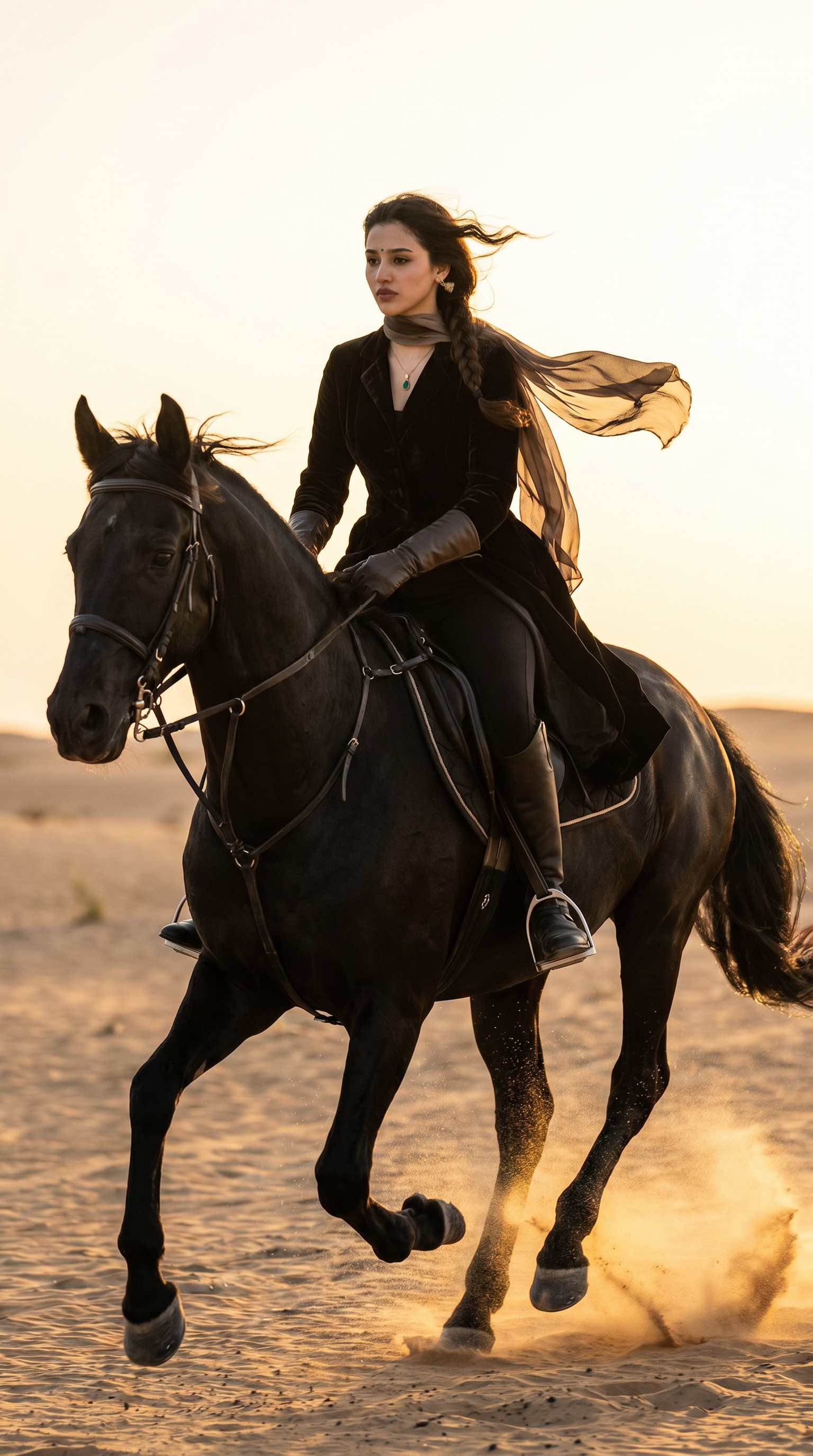
From the same frontal reference, the desert horse-riding image drifted noticeably in identity. Eye shape, nose structure, jawline, and overall facial proportions all moved away from the source, making this one of the clearest face-consistency losses in the test despite the strong visual polish of the scene.
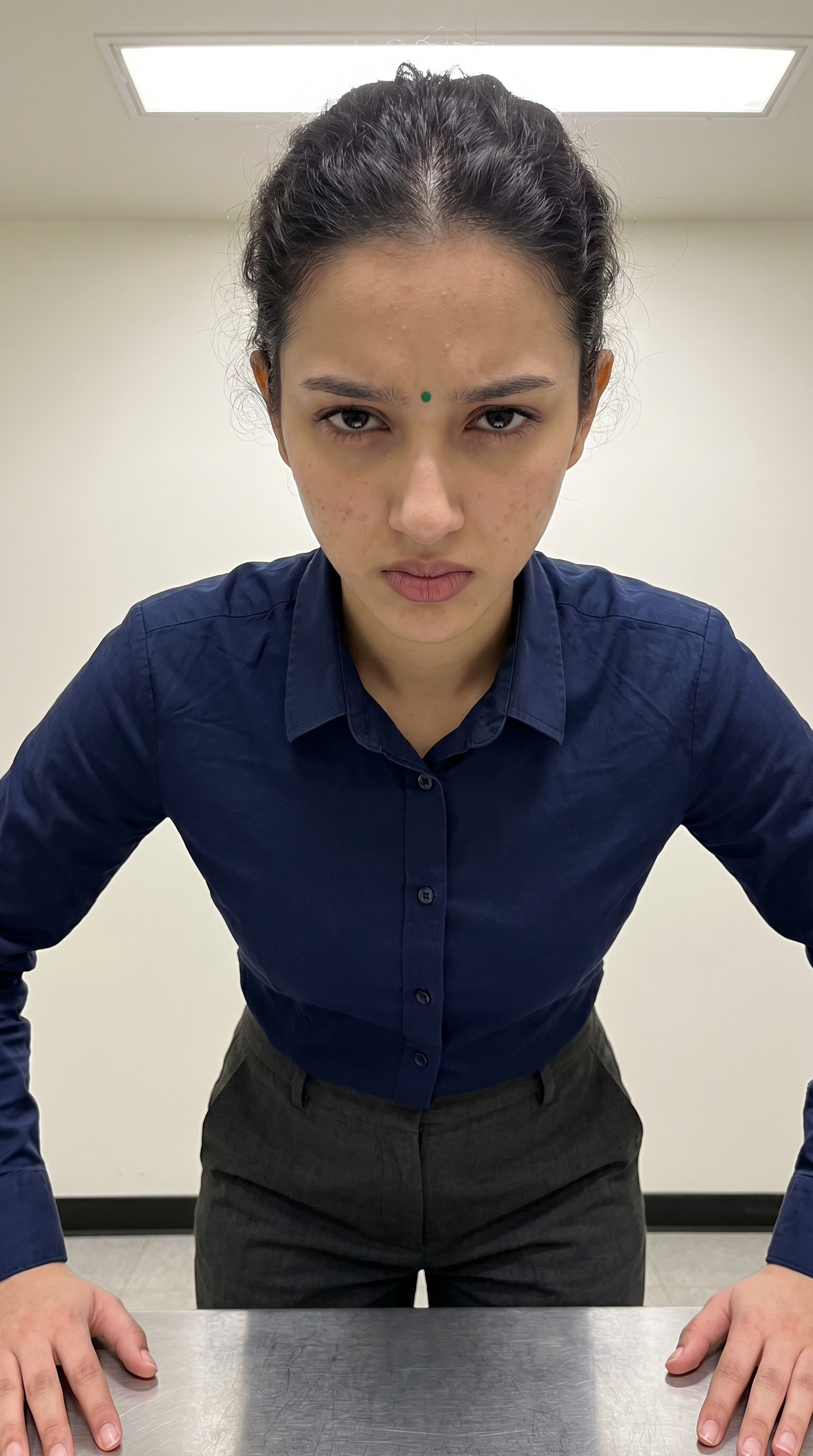
This was the closest facial match from the frontal reference. The eyes, nose, lips, and face shape stayed closest to the source image, and the harsher lighting reduced some of the tool's usual smoothing, making identity preservation stronger here than in the cafe or desert scenes.
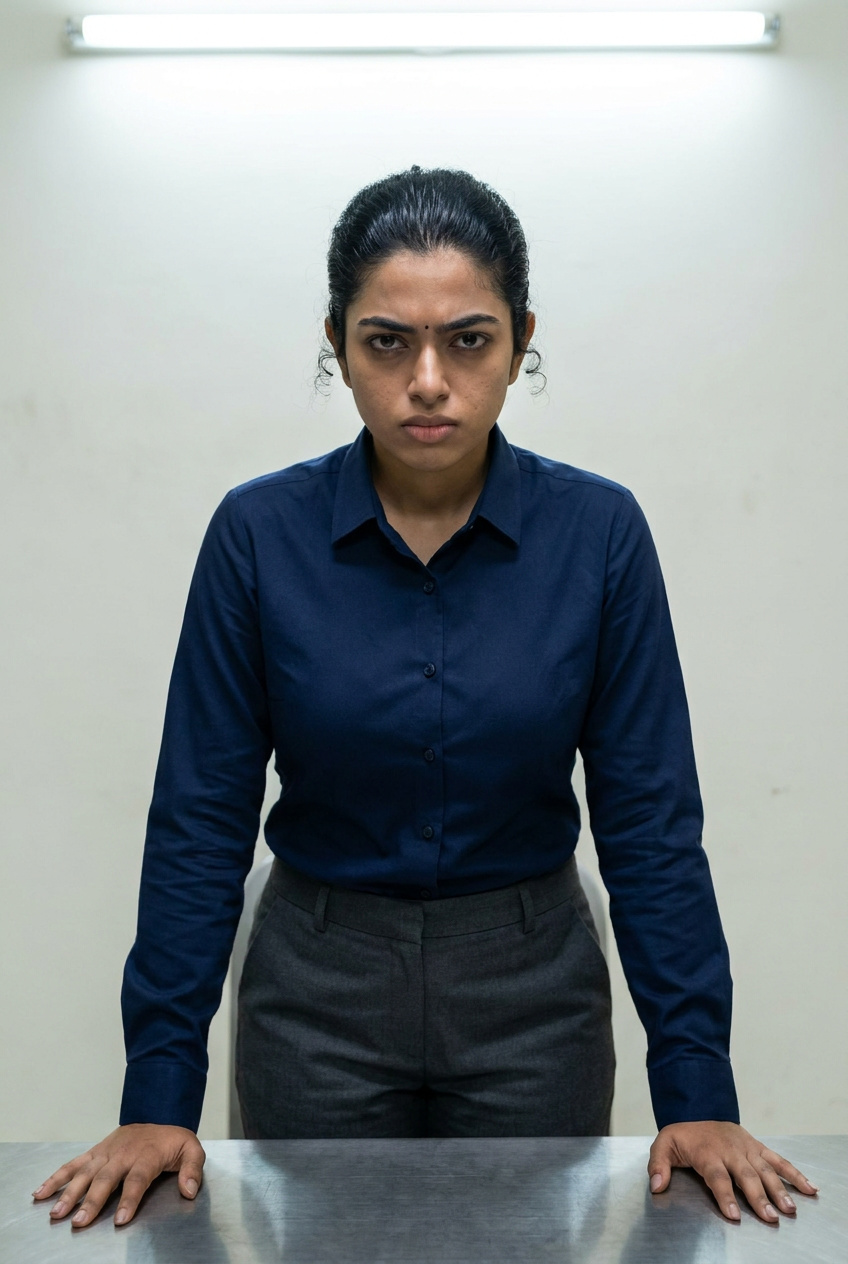
Using the angled reference, ImagineArt kept the face shape, skin tone, expression, and general identity reasonably close in the interrogation-room scene. The main losses were in finer traits rather than the full face: the dense curly hair became much flatter, and the eyebrows appeared shorter and slightly uneven compared with the reference.
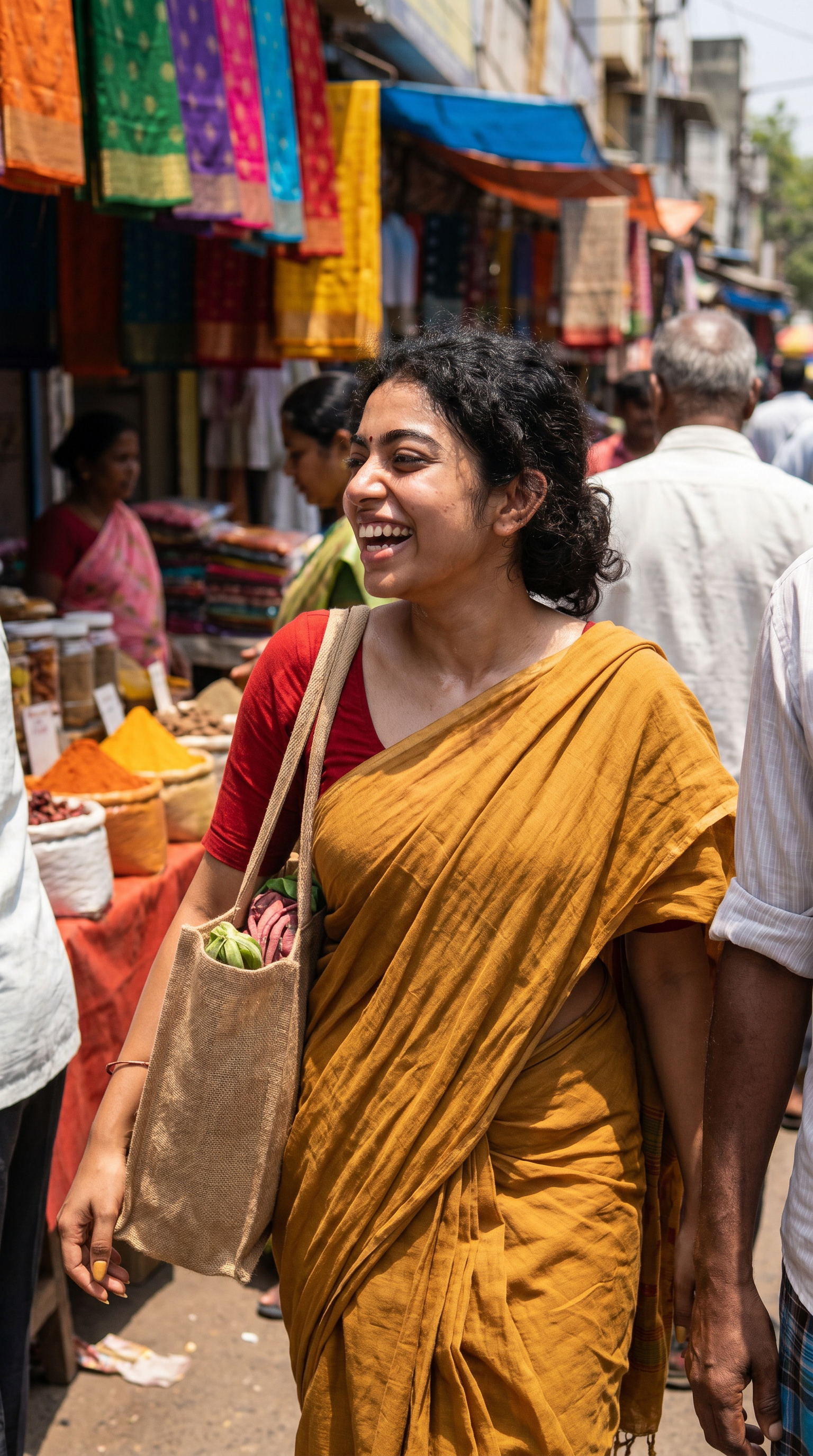
The market scene kept a similar overall look, but identity was softened by several recurring changes: the skin tone shifted lighter, visible texture and natural marks were smoothed away, and the lips looked less full and more evenly colored. The subject remained recognizable, but the output was a cleaned-up approximation rather than a faithful preservation.
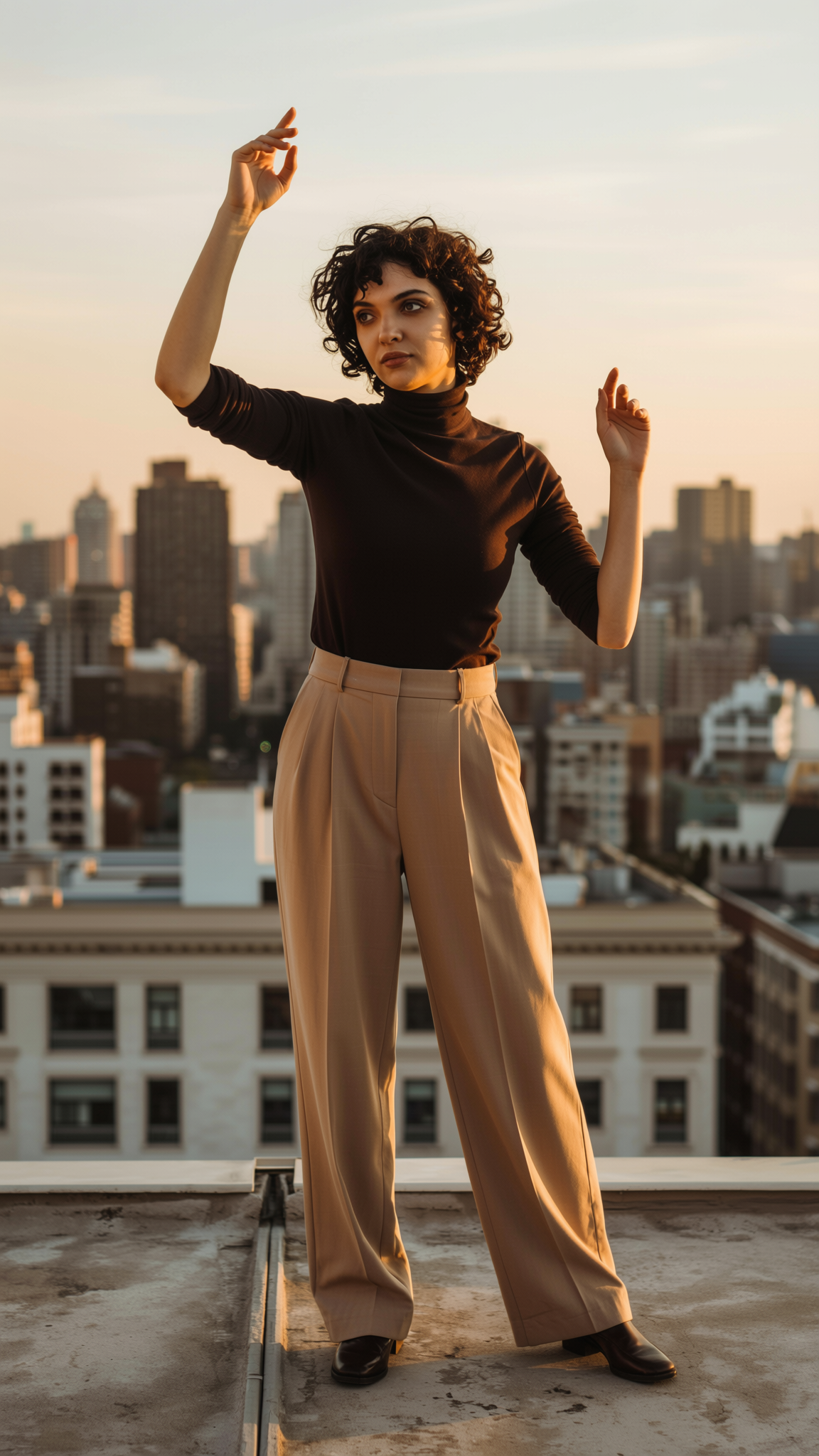
On the near-profile stress test, ImagineArt preserved the short dark curly hair better than any other tool in the research, but it failed the harder identity condition. The face turned more frontal than requested, so the original near-profile and partial-occlusion setup was not maintained, which limits trust in the tool for difficult angle preservation.
Prompted scene and pose generationUsually nails the setting and overall mood, but can miss exact pose, framing, and expression details.8/10▾
Feature tested: Prompted scene and pose generation
Result: Passed (8/10)
Verdict: Usually nails the setting and overall mood, but can miss exact pose, framing, and expression details.
Expected behavior: ImagineArt can turn a reference image plus prompt into a new environment with changed outfit, lighting, pose, and composition. This was tested across cafe, desert horse-riding, interrogation-room, market, and rooftop scenarios.
Test case: Text prompt → Image
Input type: Text prompt
Input used: Input artifact (Text prompt): Cafe scene prompt
Observed output: Output artifact (Image): Scene compliance was strong in the cafe test. ImagineArt correctly rendered the warm cafe environment, soft window lighting, seated pose, hairstyle adaptation, — best-ai-tools-to-generate-consistent-characters-ac-imagineart-input1-warm-cafe.jpg
Input artifact: Input artifact (Text prompt): Cafe scene prompt
Output artifact: Output artifact (Image): Scene compliance was strong in the cafe test. ImagineArt correctly rendered the warm cafe environment, soft window lighting, seated pose, hairstyle adaptation, — best-ai-tools-to-generate-consistent-characters-ac-imagineart-input1-warm-cafe.jpg
What changed: Text prompt transformed into Image
Test case: Text prompt → Image
Input type: Text prompt
Input used: Input artifact (Text prompt): Desert riding prompt
Observed output: Output artifact (Image): ImagineArt followed the desert-riding prompt well on most scene elements: it delivered the black horse, sandy environment, riding outfit, trailing scarf, braid, — best-ai-tools-to-generate-consistent-characters-ac-imagineart-input1-horseride.jpg
Input artifact: Input artifact (Text prompt): Desert riding prompt
Output artifact: Output artifact (Image): ImagineArt followed the desert-riding prompt well on most scene elements: it delivered the black horse, sandy environment, riding outfit, trailing scarf, braid, — best-ai-tools-to-generate-consistent-characters-ac-imagineart-input1-horseride.jpg
What changed: Text prompt transformed into Image
Test case: Text prompt → Image
Input type: Text prompt
Input used: Input artifact (Text prompt): Interrogation-room prompt
Observed output: Output artifact (Image): The interrogation-room prompt was followed well overall. Harsh overhead lighting, serious expression, formal wardrobe cues, tight-back hair, and the stark room — best-ai-tools-to-generate-consistent-characters-ac-imagineart-input1-interrogation.jpg
Input artifact: Input artifact (Text prompt): Interrogation-room prompt
Output artifact: Output artifact (Image): The interrogation-room prompt was followed well overall. Harsh overhead lighting, serious expression, formal wardrobe cues, tight-back hair, and the stark room — best-ai-tools-to-generate-consistent-characters-ac-imagineart-input1-interrogation.jpg
What changed: Text prompt transformed into Image
Test case: Text prompt → Image
Input type: Text prompt
Input used: Input artifact (Text prompt): Market scene prompt
Observed output: Output artifact (Image): The market scene was rendered convincingly. ImagineArt produced a realistic crowded market with colorful fabrics, surrounding people, and a clear outfit change, — best-ai-tools-to-generate-consistent-characters-ac-imagineart-input2-market.jpg
Input artifact: Input artifact (Text prompt): Market scene prompt
Output artifact: Output artifact (Image): The market scene was rendered convincingly. ImagineArt produced a realistic crowded market with colorful fabrics, surrounding people, and a clear outfit change, — best-ai-tools-to-generate-consistent-characters-ac-imagineart-input2-market.jpg
What changed: Text prompt transformed into Image
Test case: Text prompt → Image
Input type: Text prompt
Input used: Input artifact (Text prompt): Rooftop golden-hour prompt
Observed output: Output artifact (Image): The rooftop scene partially followed the prompt. ImagineArt rendered a detailed city skyline, full-body composition, and the general idea of raised arms, but it — best-ai-tools-to-generate-consistent-characters-ac-imagineart-input3-rooftop.png
Input artifact: Input artifact (Text prompt): Rooftop golden-hour prompt
Output artifact: Output artifact (Image): The rooftop scene partially followed the prompt. ImagineArt rendered a detailed city skyline, full-body composition, and the general idea of raised arms, but it — best-ai-tools-to-generate-consistent-characters-ac-imagineart-input3-rooftop.png
What changed: Text prompt transformed into Image
Why it matters / Conclusion: Scene generation is one of ImagineArt's strengths. It is good at building the requested world around the character, but less reliable when the prompt depends on exact pose geometry, body symmetry, or emotional intensity.
ImagineArt can turn a reference image plus prompt into a new environment with changed outfit, lighting, pose, and composition. This was tested across cafe, desert horse-riding, interrogation-room, market, and rooftop scenarios.
Scene compliance was strong in the cafe test. ImagineArt correctly rendered the warm cafe environment, soft window lighting, seated pose, hairstyle adaptation, and clothing change, and the sunlight across the face looked natural and cinematic.
ImagineArt followed the desert-riding prompt well on most scene elements: it delivered the black horse, sandy environment, riding outfit, trailing scarf, braid, and dynamic motion. The main miss was emotional direction, because the face looked composed and neutral instead of intense or determined.
The interrogation-room prompt was followed well overall. Harsh overhead lighting, serious expression, formal wardrobe cues, tight-back hair, and the stark room setup all appeared correctly, but the framing came out tighter than requested, so less body was visible than specified.
The market scene was rendered convincingly. ImagineArt produced a realistic crowded market with colorful fabrics, surrounding people, and a clear outfit change, showing strong control over environment and atmosphere.
The rooftop scene partially followed the prompt. ImagineArt rendered a detailed city skyline, full-body composition, and the general idea of raised arms, but it missed several specifics: the face was more frontal than requested, the black turtleneck became shorter-sleeved, the arms were uneven rather than balanced at shoulder height, and the golden-hour warmth was only partially captured.
Warm café close-up from a frontal portraitStrong scene match, but only moderate identity preservation.▾
Feature tested: Warm café close-up from a frontal portrait
Result: Partial
Verdict: Strong scene match, but only moderate identity preservation.
Expected behavior: Tested whether ImagineArt could take a clear frontal selfie reference and place the same person in a warm café close-up with cinematic window light, matching the requested outfit, pose, and mood.
Test case: Image → Image
Input type: Image
Input used: Input artifact (Image): Primary reference image: a clear frontal portrait selfie of a young woman with long dark wavy hair, visible eyes and forehead, earrings, and a green pendant nec — imagineart-portrait-selfie-young-woman-indoor.png
Observed output: Output artifact (Image): ImagineArt followed the café prompt well, producing the requested warm environment, window lighting, outfit, and hairstyle with a natural cinematic look and no — imagineart-generated-warm-cafe-portrait-smiling-woman.jpg
Input artifact: Input artifact (Image): Primary reference image: a clear frontal portrait selfie of a young woman with long dark wavy hair, visible eyes and forehead, earrings, and a green pendant nec — imagineart-portrait-selfie-young-woman-indoor.png
Output artifact: Output artifact (Image): ImagineArt followed the café prompt well, producing the requested warm environment, window lighting, outfit, and hairstyle with a natural cinematic look and no — imagineart-generated-warm-cafe-portrait-smiling-woman.jpg
What changed: Image transformed into Image
Why it matters / Conclusion: Good for attractive lifestyle-style variations, but not for exact face preservation.
Tested whether ImagineArt could take a clear frontal selfie reference and place the same person in a warm café close-up with cinematic window light, matching the requested outfit, pose, and mood.
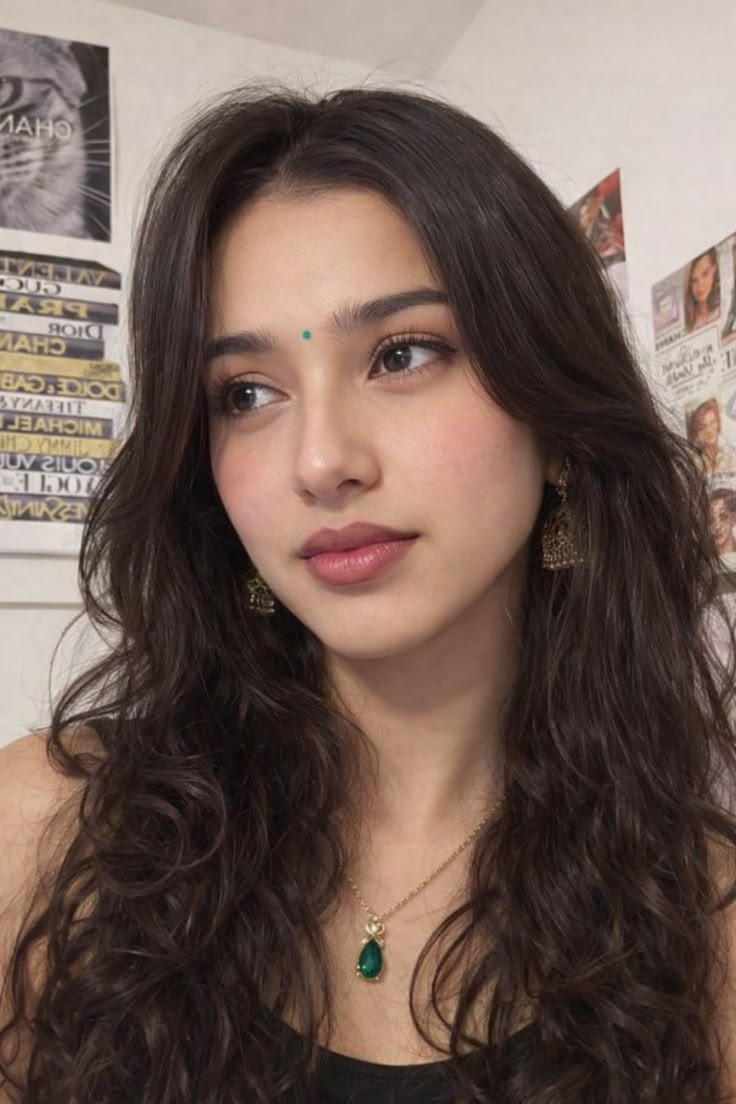
Primary reference image: a clear frontal portrait selfie of a young woman with long dark wavy hair, visible eyes and forehead, earrings, and a green pendant necklace.

ImagineArt followed the café prompt well, producing the requested warm environment, window lighting, outfit, and hairstyle with a natural cinematic look and no visible distortion. Identity preservation was only moderate: the output looked like a similar person rather than the exact same individual, the eye color shifted from black in the reference to brown in the result, and the facial proportions were beautified so the eyes, nose, and lips looked slightly altered.
Action-scene consistency in a desert horse rideScene quality stayed strong, but identity drift was clear.▾
Feature tested: Action-scene consistency in a desert horse ride
Result: Failed
Verdict: Scene quality stayed strong, but identity drift was clear.
Expected behavior: Tested whether the same frontal reference could hold identity in a much harder transformation: a dynamic desert horse-riding scene with motion, outfit changes, and a more intense expression.
Test case: Image → Image
Input type: Image
Input used: Input artifact (Image): Primary reference image: a clear frontal portrait selfie of a young woman with long dark wavy hair, visible facial features, and even visibility across the face — imagineart-portrait-selfie-young-woman-indoor.png
Observed output: Output artifact (Image): ImagineArt rendered the requested action scene convincingly, including the black horse, desert setting, riding outfit, scarf, braided hair, and strong cinematic — imagineart-woman-horse-desert-sunset-action.jpg
Input artifact: Input artifact (Image): Primary reference image: a clear frontal portrait selfie of a young woman with long dark wavy hair, visible facial features, and even visibility across the face — imagineart-portrait-selfie-young-woman-indoor.png
Output artifact: Output artifact (Image): ImagineArt rendered the requested action scene convincingly, including the black horse, desert setting, riding outfit, scarf, braided hair, and strong cinematic — imagineart-woman-horse-desert-sunset-action.jpg
What changed: Image transformed into Image
Why it matters / Conclusion: ImagineArt can stage dramatic action scenes, but it struggled to keep the same person recognizable here.
Tested whether the same frontal reference could hold identity in a much harder transformation: a dynamic desert horse-riding scene with motion, outfit changes, and a more intense expression.
Primary reference image: a clear frontal portrait selfie of a young woman with long dark wavy hair, visible facial features, and even visibility across the face.
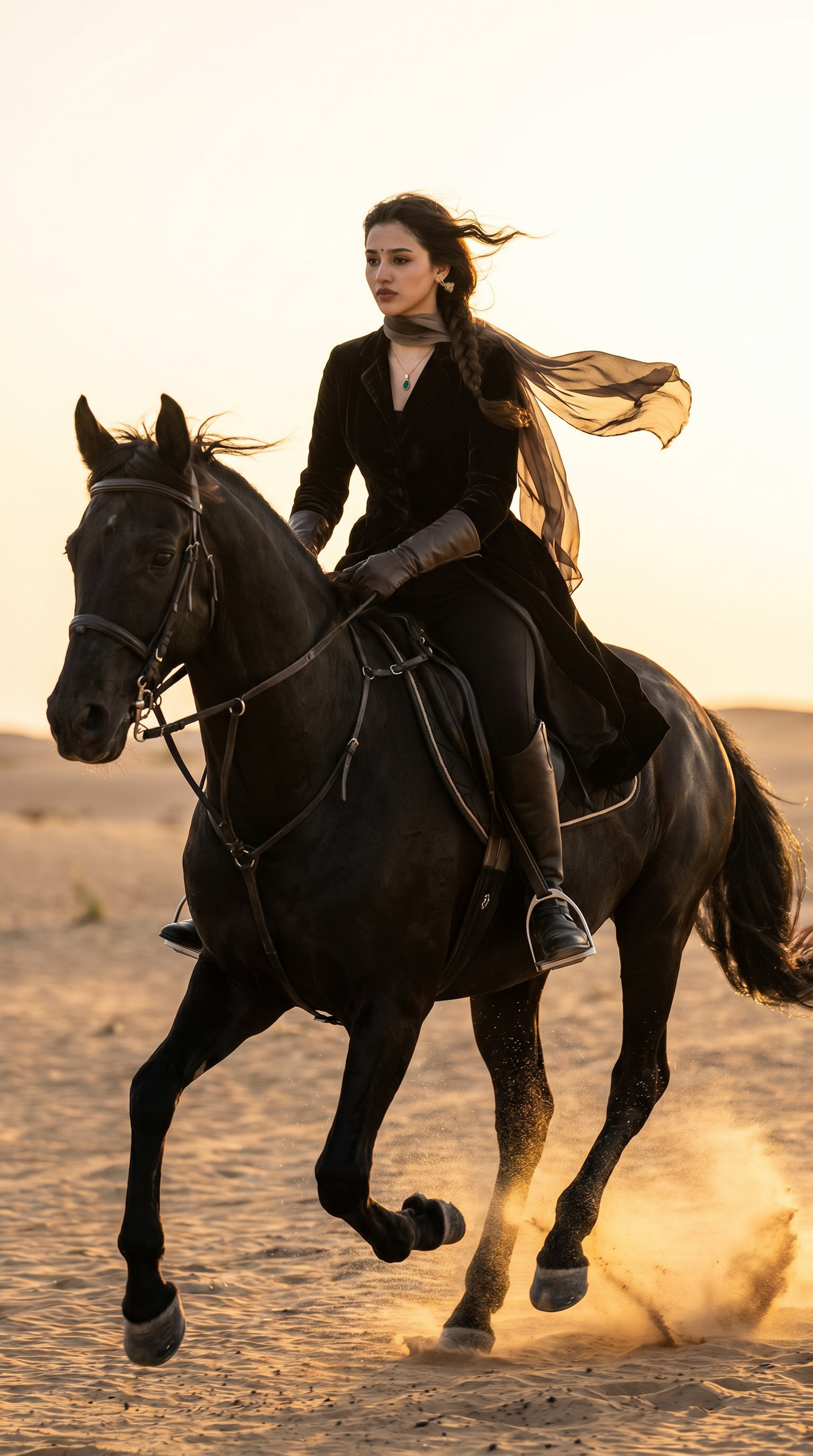
ImagineArt rendered the requested action scene convincingly, including the black horse, desert setting, riding outfit, scarf, braided hair, and strong cinematic realism. However, identity drift was significant: the eye shape, nose structure, jawline, and overall facial proportions no longer matched the reference closely. It also missed the requested emotional tone, producing a neutral, composed face instead of the intended intense, determined sports-like expression.
Harsh-light interrogation scene from a frontal referenceBest identity result from the frontal reference set.▾
Feature tested: Harsh-light interrogation scene from a frontal reference
Result: Passed
Verdict: Best identity result from the frontal reference set.
Expected behavior: Tested whether a controlled interrogation-room prompt with harsh overhead lighting and a plain environment would preserve identity better than more stylized scenes from the same frontal reference.
Test case: Image → Image
Input type: Image
Input used: Input artifact (Image): Primary reference image: a full frontal portrait with the face clearly visible, making it the strongest identity-lock test case. — imagineart-portrait-selfie-young-woman-indoor.png
Observed output: Output artifact (Image): This was the strongest identity match from the Input 1 tests. The eyes, nose, lips, and face shape stayed closest to the reference, while the tool also followed — imagineart-interrogation-room-stern-leaning-forward.jpg
Input artifact: Input artifact (Image): Primary reference image: a full frontal portrait with the face clearly visible, making it the strongest identity-lock test case. — imagineart-portrait-selfie-young-woman-indoor.png
Output artifact: Output artifact (Image): This was the strongest identity match from the Input 1 tests. The eyes, nose, lips, and face shape stayed closest to the reference, while the tool also followed — imagineart-interrogation-room-stern-leaning-forward.jpg
What changed: Image transformed into Image
Why it matters / Conclusion: When the prompt is more controlled and the reference is frontal, ImagineArt can get reasonably close to the original identity.
Tested whether a controlled interrogation-room prompt with harsh overhead lighting and a plain environment would preserve identity better than more stylized scenes from the same frontal reference.
Primary reference image: a full frontal portrait with the face clearly visible, making it the strongest identity-lock test case.
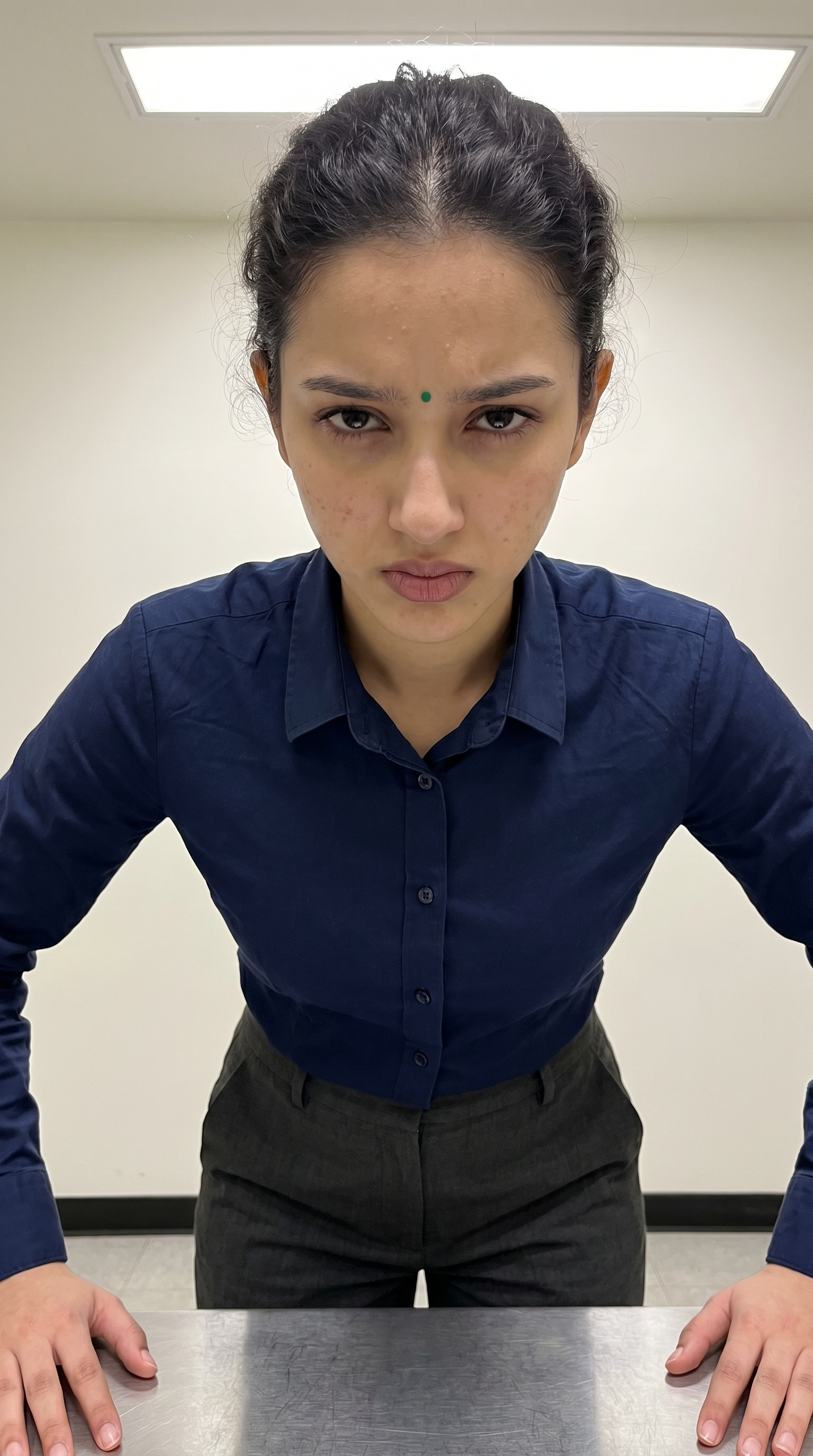
This was the strongest identity match from the Input 1 tests. The eyes, nose, lips, and face shape stayed closest to the reference, while the tool also followed the prompt well with harsh overhead lighting, a serious expression, formal clothing, tightly pulled-back hair, and a bindi. The harsher lighting also revealed more skin texture than the other Input 1 scenes, reducing the usual smoothing effect. The main miss was framing: less of the body was visible than the prompt specified.
Side-pose reference preservation in an interrogation roomA strong result overall, though finer hair and brow details were lost.▾
Feature tested: Side-pose reference preservation in an interrogation room
Result: Passed
Verdict: A strong result overall, though finer hair and brow details were lost.
Expected behavior: Tested whether ImagineArt could preserve a person from a 60 to 70 degree side-pose reference in the same interrogation-room setup, isolating the effect of reference angle while keeping the prompt type similar.
Test case: Image → Image
Input type: Image
Input used: Input artifact (Image): Secondary reference image: a warm, dimly lit portrait of a woman in a side pose with only part of the face fully visible and some skin tone and texture softened — imagineart-warm-cafe-portrait-woman-hand-on-chin.png
Observed output: Output artifact (Image): ImagineArt handled this side-angle reference fairly well. The output kept the face shape, skin tone, expression, posture, clothing, lighting, and interrogation- — imagineart-interrogation-room-standing-hands-on-table.jpg
Input artifact: Input artifact (Image): Secondary reference image: a warm, dimly lit portrait of a woman in a side pose with only part of the face fully visible and some skin tone and texture softened — imagineart-warm-cafe-portrait-woman-hand-on-chin.png
Output artifact: Output artifact (Image): ImagineArt handled this side-angle reference fairly well. The output kept the face shape, skin tone, expression, posture, clothing, lighting, and interrogation- — imagineart-interrogation-room-standing-hands-on-table.jpg
What changed: Image transformed into Image
Why it matters / Conclusion: A side-pose reference can still work, but detail retention drops even when the face remains reasonably recognizable.
Tested whether ImagineArt could preserve a person from a 60 to 70 degree side-pose reference in the same interrogation-room setup, isolating the effect of reference angle while keeping the prompt type similar.
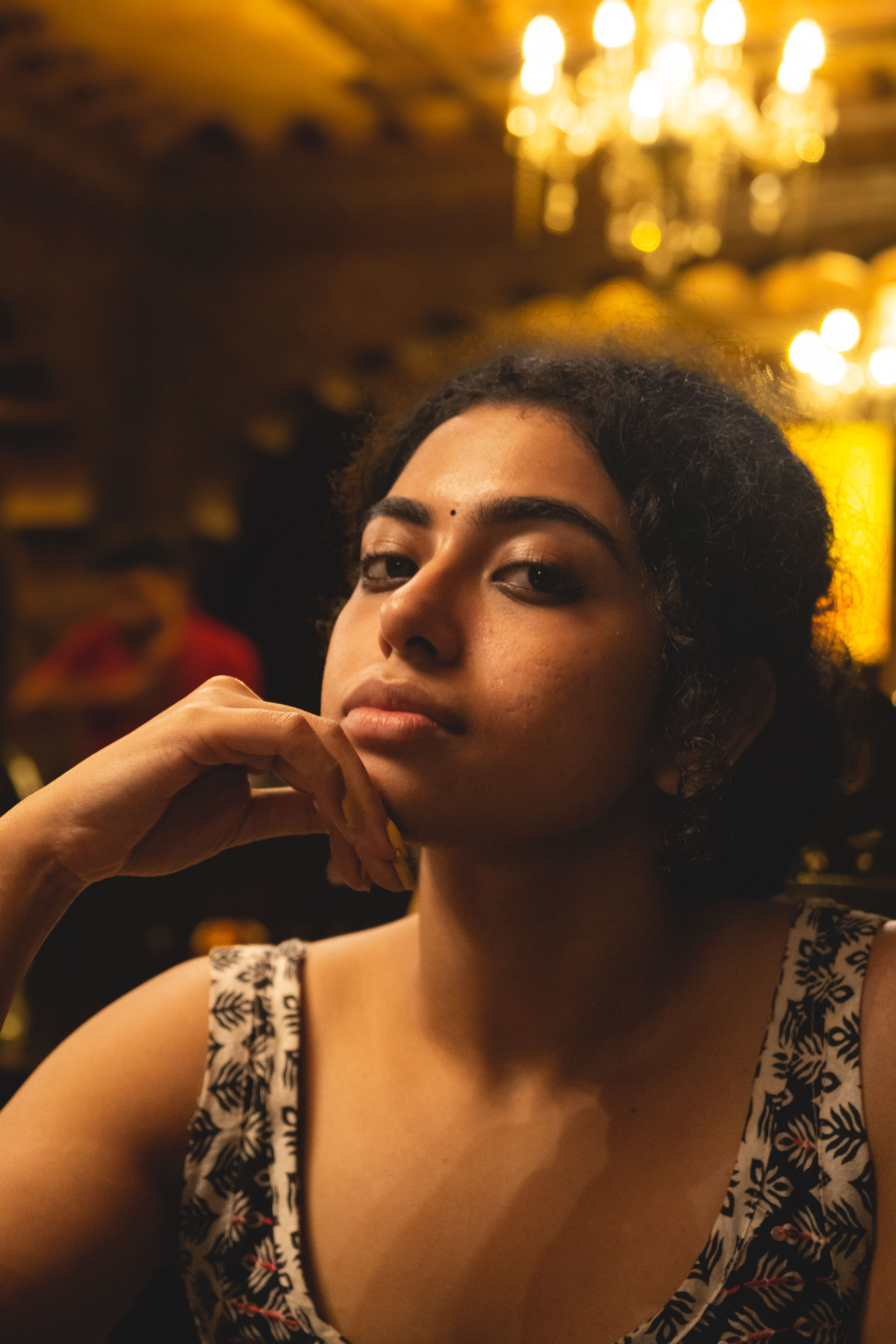
Secondary reference image: a warm, dimly lit portrait of a woman in a side pose with only part of the face fully visible and some skin tone and texture softened by lighting.
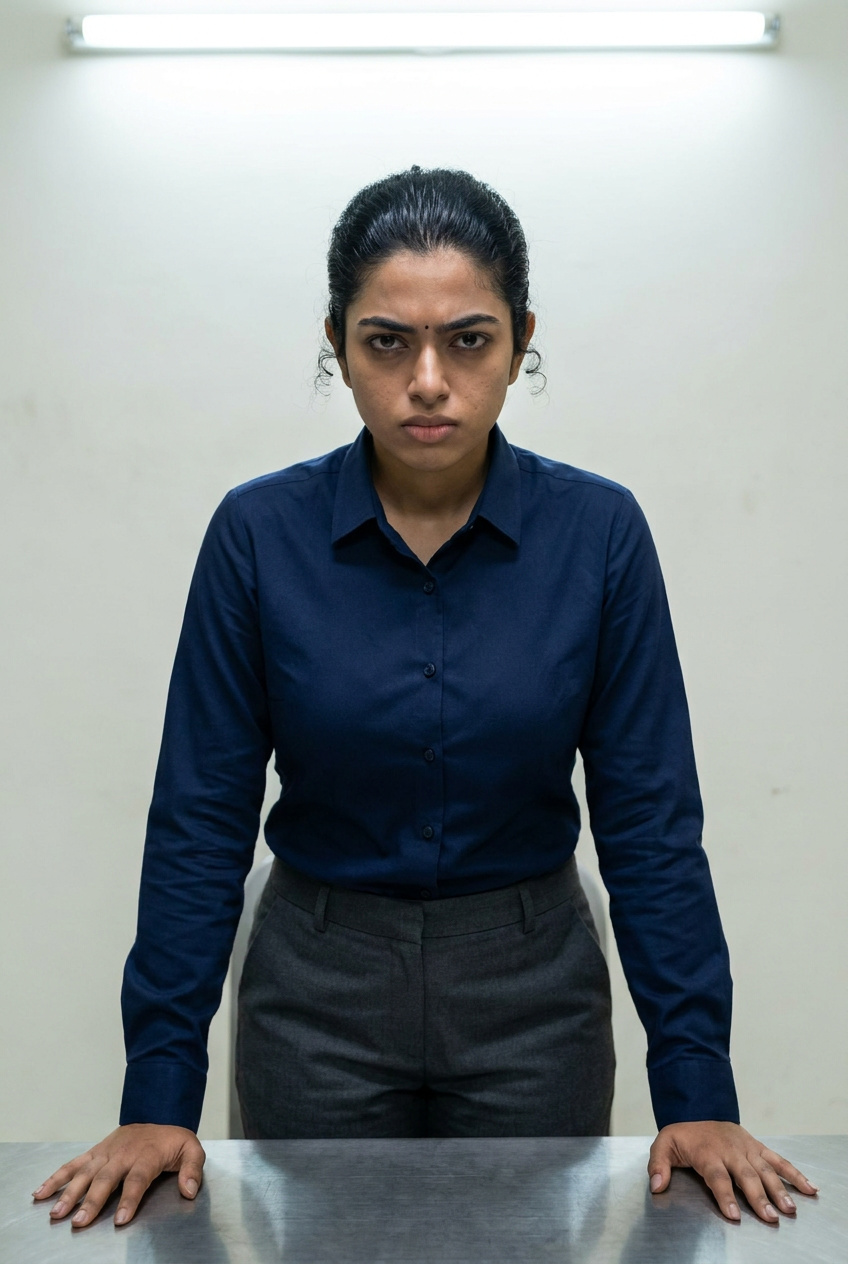
ImagineArt handled this side-angle reference fairly well. The output kept the face shape, skin tone, expression, posture, clothing, lighting, and interrogation-room environment close to the reference and prompt. Identity preservation was good rather than exact, with the main losses showing up in finer details: the dense curly hair from the reference was flattened with much less volume, and the eyebrows appeared shorter and slightly uneven compared with the source image.
Skin-tone and texture retention in a crowded street market scenePrompt execution was strong, but smoothing and tone shifts weakened identity fidelity.▾
Feature tested: Skin-tone and texture retention in a crowded street market scene
Result: Partial
Verdict: Prompt execution was strong, but smoothing and tone shifts weakened identity fidelity.
Expected behavior: Tested whether the same side-pose reference could stay recognizable in a busier outdoor market scene while preserving natural skin tone, facial texture, and overall likeness.
Test case: Image → Image
Input type: Image
Input used: Input artifact (Image): Secondary reference image: a woman in a warm side-angle portrait with darker skin tone, visible natural texture, and fuller lips with visible natural pigmentati — imagineart-warm-cafe-portrait-woman-hand-on-chin.png
Observed output: Output artifact (Image): ImagineArt produced a realistic market scene and followed the prompt well, keeping the overall appearance and curly hair reasonably close to the reference. Iden — imagineart-busy-market-woman-yellow-sari.jpg
Input artifact: Input artifact (Image): Secondary reference image: a woman in a warm side-angle portrait with darker skin tone, visible natural texture, and fuller lips with visible natural pigmentati — imagineart-warm-cafe-portrait-woman-hand-on-chin.png
Output artifact: Output artifact (Image): ImagineArt produced a realistic market scene and followed the prompt well, keeping the overall appearance and curly hair reasonably close to the reference. Iden — imagineart-busy-market-woman-yellow-sari.jpg
What changed: Image transformed into Image
Why it matters / Conclusion: The scene looked publishable, but the person was visibly beautified rather than faithfully preserved.
Tested whether the same side-pose reference could stay recognizable in a busier outdoor market scene while preserving natural skin tone, facial texture, and overall likeness.
Secondary reference image: a woman in a warm side-angle portrait with darker skin tone, visible natural texture, and fuller lips with visible natural pigmentation.
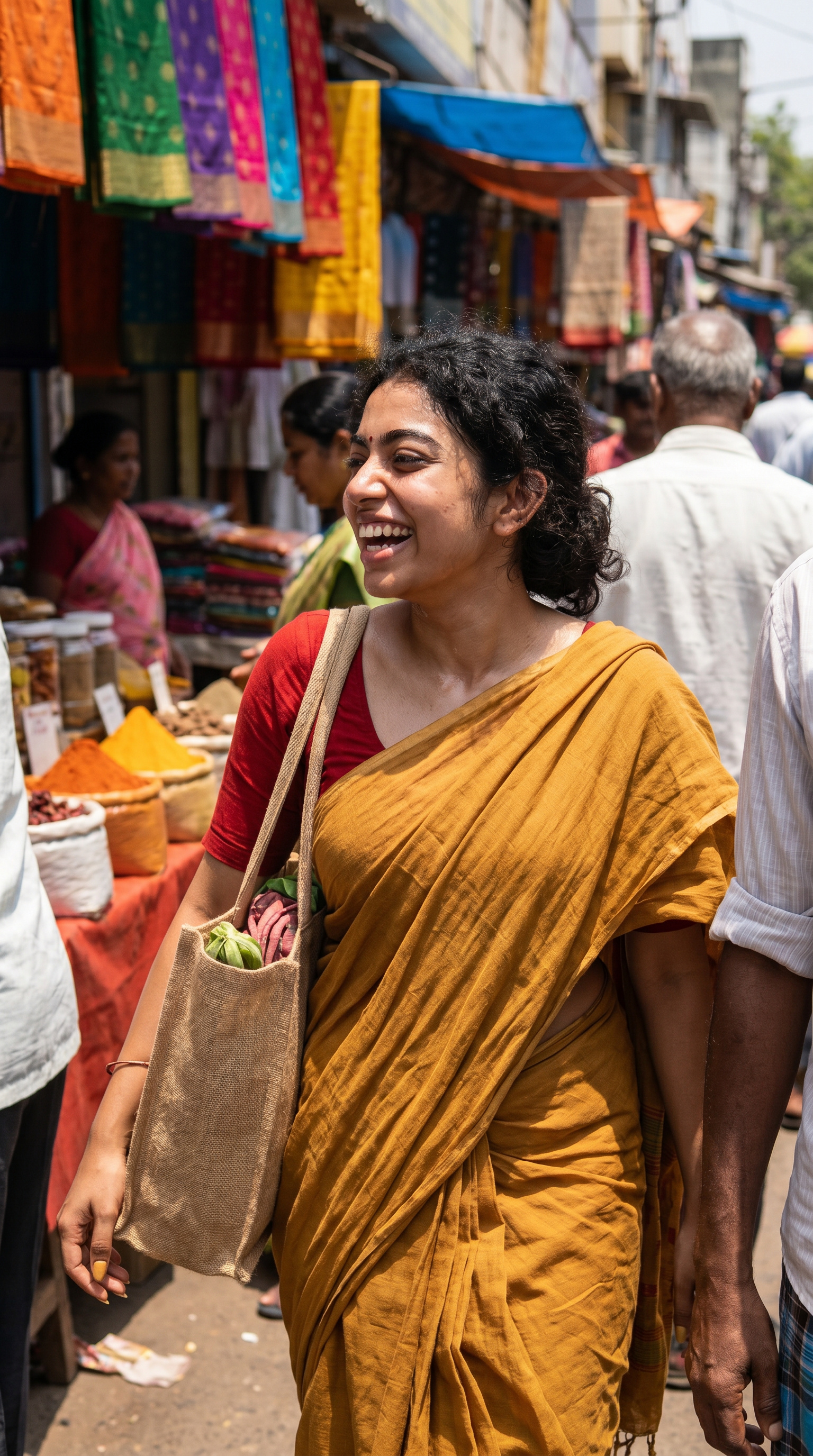
ImagineArt produced a realistic market scene and followed the prompt well, keeping the overall appearance and curly hair reasonably close to the reference. Identity preservation was only moderate because several specific features changed: the skin tone shifted lighter than the darker reference image, natural skin marks, pores, and scars were smoothed away, and the lips became less full and more evenly colored, losing the natural pigmentation visible in the input. This matched the broader beautification pattern seen across the tool.
Near-profile stress test on a rooftop poseBest hair retention in this scenario, but the core near-profile stress condition failed.▾
Feature tested: Near-profile stress test on a rooftop pose
Result: Failed
Verdict: Best hair retention in this scenario, but the core near-profile stress condition failed.
Expected behavior: Tested whether ImagineArt could keep a near-profile, partially occluded face consistent while generating a full-body rooftop golden-hour pose with raised arms, long sleeves, and a detailed city background.
Test case: Image → Image
Input type: Image
Input used: Input artifact (Image): Stress-test reference image: a near-profile portrait with the face turned roughly 80 to 90 degrees, one eye partly occluded, short dark wavy hair, and a moody c — imagineart-side-profile-portrait-teal-background.png
Observed output: Output artifact (Image): ImagineArt created a detailed rooftop scene with a strong city skyline, a full-body composition, raised arms, and no visible distortion in the body or face. It — imagineart-rooftop-fashion-portrait-sunset-skyline.png
Input artifact: Input artifact (Image): Stress-test reference image: a near-profile portrait with the face turned roughly 80 to 90 degrees, one eye partly occluded, short dark wavy hair, and a moody c — imagineart-side-profile-portrait-teal-background.png
Output artifact: Output artifact (Image): ImagineArt created a detailed rooftop scene with a strong city skyline, a full-body composition, raised arms, and no visible distortion in the body or face. It — imagineart-rooftop-fashion-portrait-sunset-skyline.png
What changed: Image transformed into Image
Why it matters / Conclusion: ImagineArt handled hair and background detail well here, but it did not preserve the difficult face angle that made this a meaningful consistency test.
Tested whether ImagineArt could keep a near-profile, partially occluded face consistent while generating a full-body rooftop golden-hour pose with raised arms, long sleeves, and a detailed city background.

Stress-test reference image: a near-profile portrait with the face turned roughly 80 to 90 degrees, one eye partly occluded, short dark wavy hair, and a moody close-up composition.
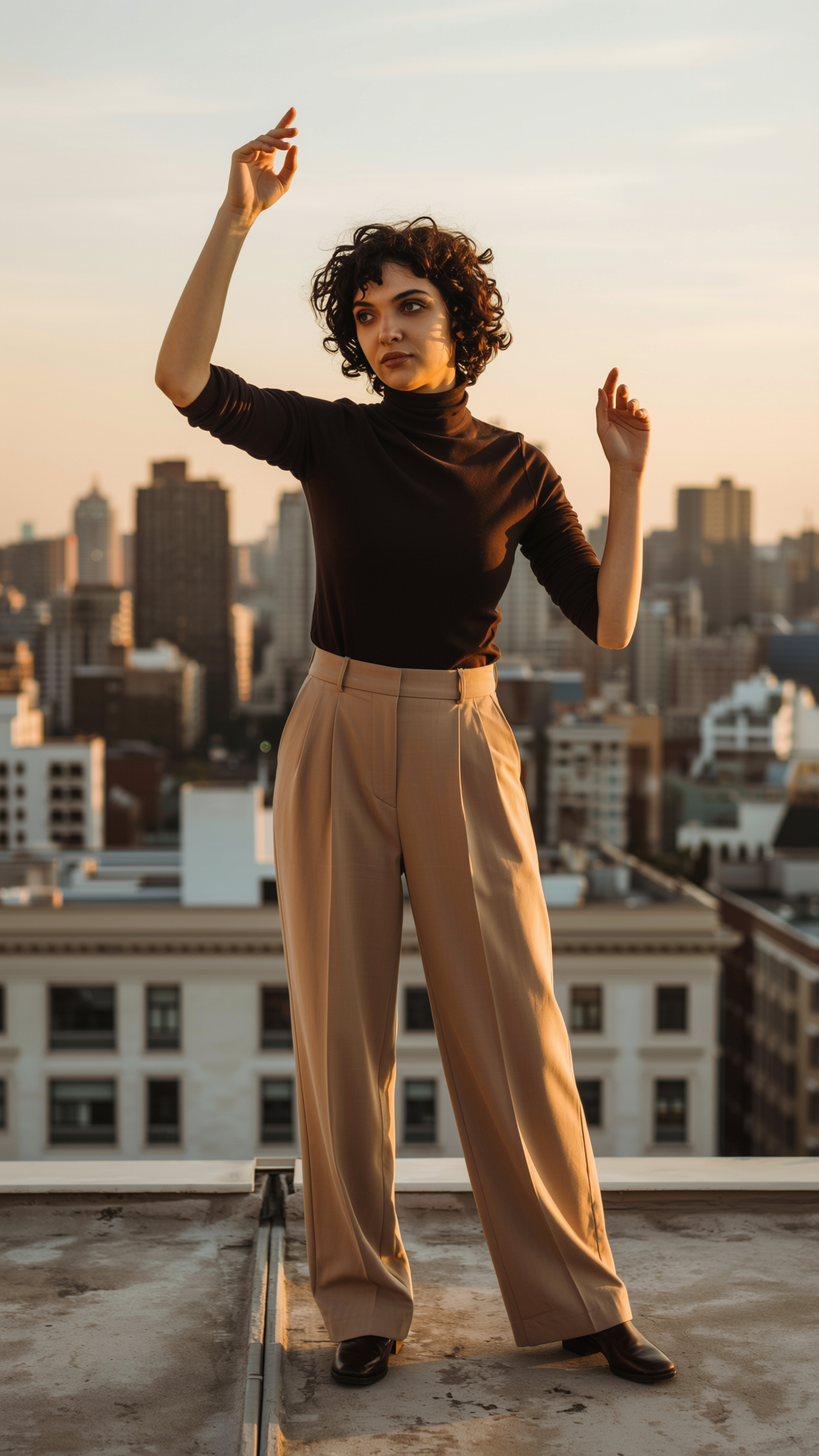
ImagineArt created a detailed rooftop scene with a strong city skyline, a full-body composition, raised arms, and no visible distortion in the body or face. It also preserved the short dark curly hair unusually well; this was noted as the best hair-texture retention among the five tools tested on this rooftop scenario. But the main stress condition failed: the face became more frontal instead of staying near-profile, so the occlusion challenge was not actually preserved. Prompt accuracy was also partial because the black turtleneck became shorter-sleeved, one arm was raised higher than the other instead of both being balanced at shoulder height, and the golden-hour warmth was only partially captured.
Pricing & Access
Pricing, credits, and generation limits are subject to change. Check the official ImagineArt pricing page for the latest details.
Is This Right For You?
A side-by-side guide based on our hands-on testing.
Featured in Rankings
Independent rankings where ImagineArt was tested and rated.
Banner Preview
How the embed badge will look on your site

Embed HTML
Copy this code to your website source
Quick Integration Guide
- 1Copy the HTML code block above.
- 2Paste it into your site's HTML or CMS editor.
- 3Banner appears instantly on your page.
- 4Links back to your tool profile here.
Similar Tools
Discover more AI tools like ImagineArt to enhance your workflow.
Comments (0)
Need a custom AI solution for this use case?
If you are looking to build a custom image generation, photo-to-scene transformation, or cinematic visual creation workflow for your business or internal workflow, email us at contact@futuresmart.ai.
Found something inaccurate or missing? We try to keep our AI research accurate and useful. If you found outdated information, an issue, or have a suggestion, email us at collaborate@aidemos.com.