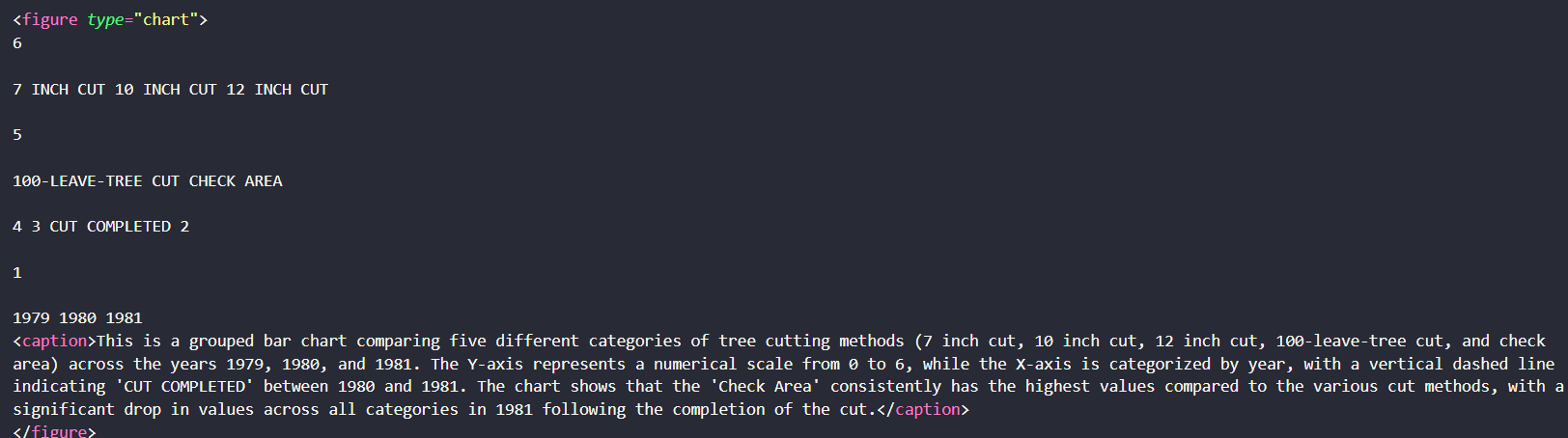
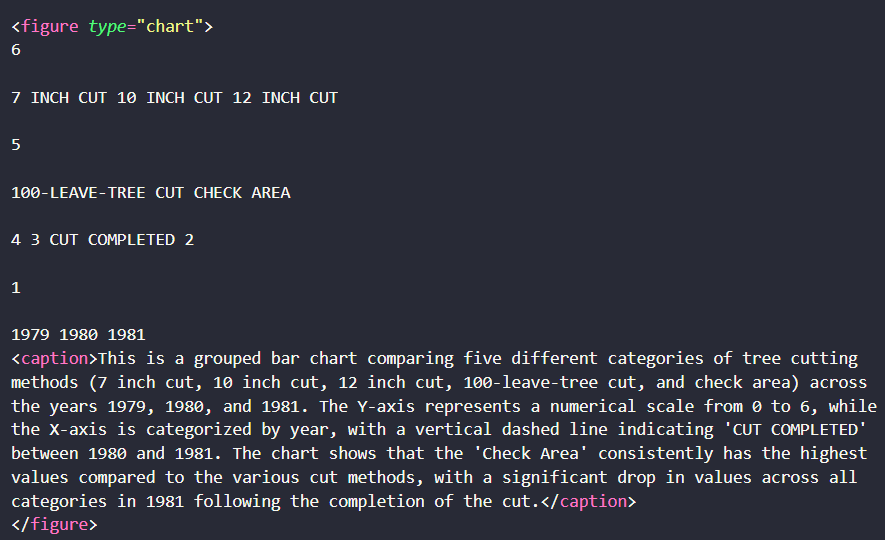
Extracts chart values into a captioned figure block, but the report says the mortality chart's trend visualization is not fully retained.
What was measured
Visual Content Retention
Retains charts, figures, diagrams, and images in the output and places them in the correct reading position.
decisive for this rankingtransformation
For complex PDFs, figures, charts, and images are part of the document content, so preserving them in the right place is part of the core job. (3 of 3 judges)
What was given, what came back
Test input: Scanned Research Paper · pdf · group: scanned-research-paper
Input — what we sent
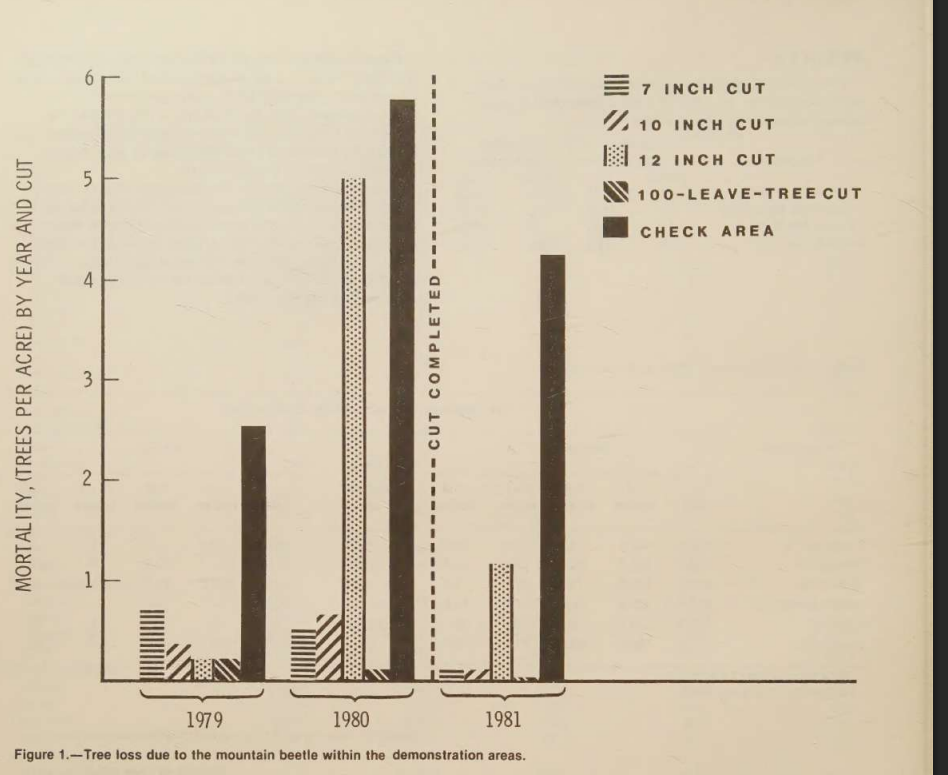
An image-only scanned research paper used to stress OCR and layout recovery in a multi-column academic document with figures, charts, tables, captions, and references.
Why this input is hard
- · OCR on scanned pages
- · Multi-column reading order
- · Figure and chart handling
- · Table reconstruction from scans
- · Caption association
- · Reference extraction
- · Overall document structure retention
Output — unretouched
Also checked on this input — same tool, 6 other criteria
Complex Document Handling✓ WorkedHandles the scanned research paper end-to-end, including multi-column prose, tables, charts, and handwritten marginalia, while still producing parsed markdown.Reading Order & Structure✓ WorkedReconstructs a multi-column research page so the 'STUDY AREA' heading, its paragraphs, and the following 'STAND PRESCRIPTIONS' section stay in order.Table Preservation✓ WorkedRebuilds multi-row tables with the row/column grid intact, preserving treatment rows and year columns in the scanned table extraction.Table Preservation◐ MixedKeeps the numeric table structure, but drops between-column annotations and leaves stray OCR characters in some numeric cells, so contextual information is partially lost.Table Preservation⚠ StruggledBreaks multirow header relationships in a scanned table, so grouped headers and header-level structure are not reliably preserved.Text & OCR Completeness◐ MixedDetects faint handwritten margin text, but only partially; the transcription shows 'USDA Semaine' and the remainder is treated as illegible.
Provenance
- Observation
- 1074ca2a-2a45-4de6-a0fb-e861d4262e74
- Evidence run
- 6e3160de-fe46-4b45-b071-72560b5c5d0e
- Study
- Convert a Complex PDF into Clean Markdown with an API
- Research task
- 86b9h7t37
- Tested at
- not recorded
- Source
- first-party
- Evidence state
- verified
- Proof shown
- input + output shown
- Cost / latency
- not captured
- Repeat run
- not captured
- Tester
- not captured
The last three rows are honest blanks, not placeholders — our capture has no field for them yet.
Query this
get_evidence({
  tool: "extend-ai",
  scenario: "scanned-research-paper"
})
MCP · mcp.aidemos.com/api/mcp
Free with attribution.
Same input, same check — 6 other tools
measured on Visual Content Retention
Adobe API✓ WorkedKeeps chart artwork embedded in the extracted page, placing the residual basal-area figure in situ beneath the extracted table text.Landing AI✗ FailedConverts a scanned bar chart into a textual transcription of legend items and approximate values instead of retaining the chart visually in the output.LlamaParse◐ MixedConverts a bar chart into a structured table, preserving the legend/value mapping but not keeping the chart as a visual chart.Mistral AI✓ WorkedCharts are exposed through both page-wise markdown files and the extracted visual assets, keeping the visual content linked to its original document location.Nutrient.io⚠ StruggledExtracts the Figure 3 chart's values, but the chart structure and layout are not preserved, so the visualization is flattened into text-like output.Reducto✓ WorkedSegments a shield logo out of a single full-page raster scan and also retains Figure 1 as an image with an accurate synthesized caption; the returned logo crop is a tight 77x81px cut with legible shield text.
This evidence is published in
Real inputs and real outputs, no retouching · every cell queryable via API & MCP · aidemos.com