The desert-horse output shows clear identity drift, with the eye shape, nose structure, jawline, and face proportions all differing from the reference.
What was measured
Identity preservation
How closely the generated face matches the reference image across scenes.
decisive for this rankingtransformation
This is the core of the task: the tool must keep the same character looking like the reference image across scenes. (3 of 3 judges)
What was given, what came back
Test input: Full frontal portrait · image
Input — what we sent

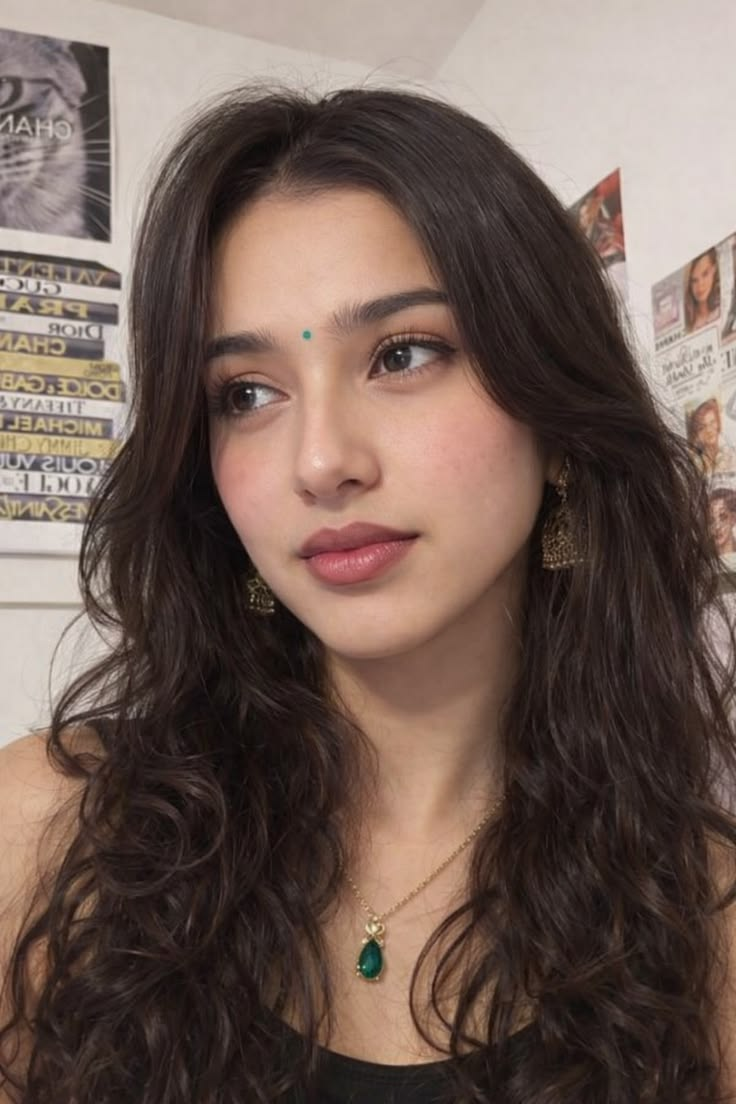
Full frontal portrait
Full frontal portrait reference image with fair skin, curly dark hair, bindi, gold jhumka earrings, and a green stone necklace. All features are clearly visible in good natural lighting, making it the easiest identity anchor for the tools.
Why this input is hard
- · Baseline identity preservation
- · Accessory retention
- · Best-case frontal face matching
- · Consistent character reuse across varied scenes
Output — unretouched

Also checked on this input — same tool, 7 other criteria
Accessory & detail retention◐ MixedThe warm-cafe output changes a specific facial detail: the eye colour shifts from black in the reference to brown in the output.Accessory & detail retention✓ WorkedThe interrogation-room output retains the bindi and tight back hair correctly, and the report says harsh lighting reveals more skin texture with less over-smoothing than the other Input 1 scenes.Expression accuracy✓ WorkedThe interrogation-room output matches the requested serious, guarded expression.Expression accuracy✗ FailedThe desert-horse output does not match the prompted intensity and determination; the expression is neutral and composed instead.Scene compliance◐ MixedThe interrogation-room output follows the harsh lighting, serious expression, formal clothing, tight back hair, and bindi, but it shows less body than the prompt specified.Scene compliance✓ WorkedThe warm-cafe output follows the prompt well, with the café environment, window lighting, outfit, and hairstyle all rendered correctly.Scene compliance✓ WorkedThe desert-horse output follows the scene prompt well, including the black horse, desert setting, riding outfit, scarf, braided hair, and dynamic motion.
Provenance
- Observation
- a9483897-1a64-47e5-ac48-2e943f7a2286
- Evidence run
- 1dfb8fa4-f7f0-47dc-911b-7db3af467e9a
- Study
- Generate Consistent AI Characters Across Different Scenes and Poses
- Research task
- 86b96df11
- Tested at
- not recorded
- Source
- first-party
- Evidence state
- verified
- Proof shown
- input + output shown
- Cost / latency
- not captured
- Repeat run
- not captured
- Tester
- not captured
The last three rows are honest blanks, not placeholders — our capture has no field for them yet.
Query this
get_evidence({
  tool: "imagineart"
})
MCP · mcp.aidemos.com/api/mcp
Free with attribution.
Same input, same check — 4 other tools
measured on Identity preservation
ChatGPT✓ WorkedKeeps facial structure close to the reference in a frontal composition and is described as the best output from this input, with identity held strongly overall.Gemini✗ FailedIn the horse-riding scene, the tool can erase the reference face entirely: the report calls the identity match very weak and says the output is a completely different character with changed face shape, eyes, and eyebrows.Leonardo AI◐ MixedIt can keep a frontal character recognisable in a new scene, but the face is refined enough that the match is only moderate.Scenario✓ WorkedThe tool can keep a subject recognisably the same person in an action scene, with face shape, eyes, and overall look staying close to the reference.
This evidence is published in
Real inputs and real outputs, no retouching · every cell queryable via API & MCP · aidemos.com